A real client commission · Hand-painted acrylic
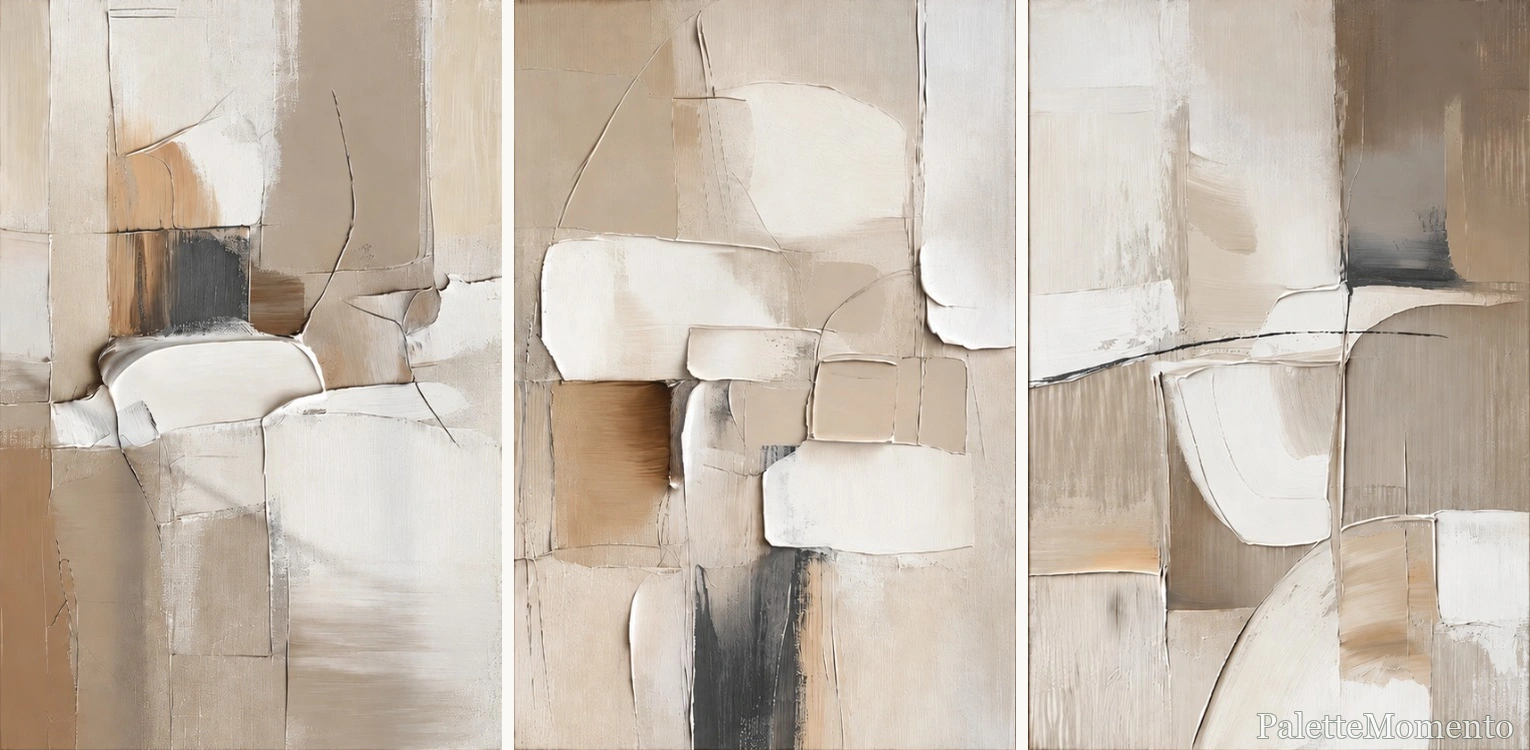
Beige and Cream Textured Abstract Triptych Painting
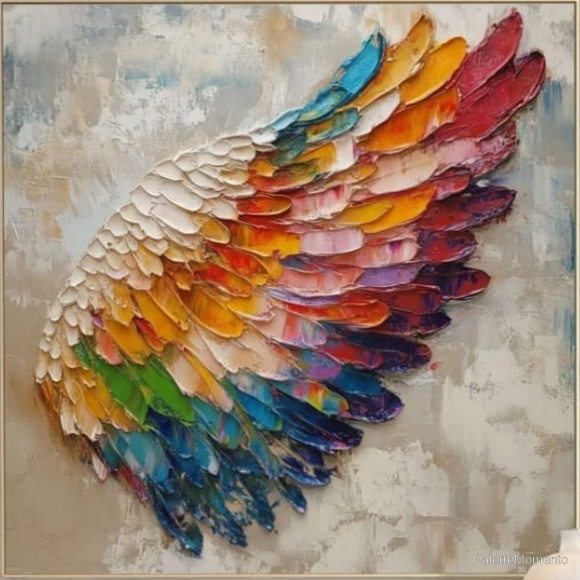
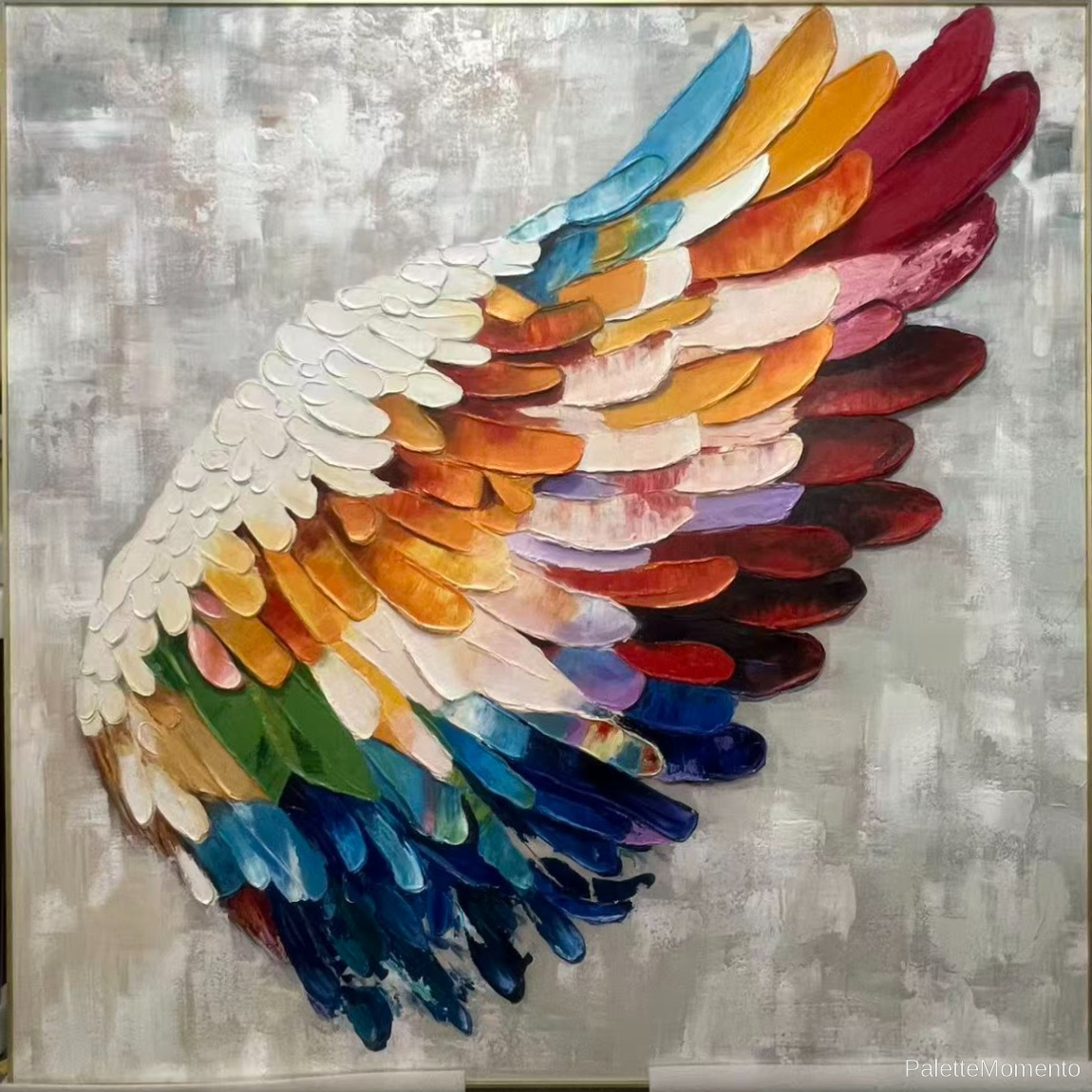
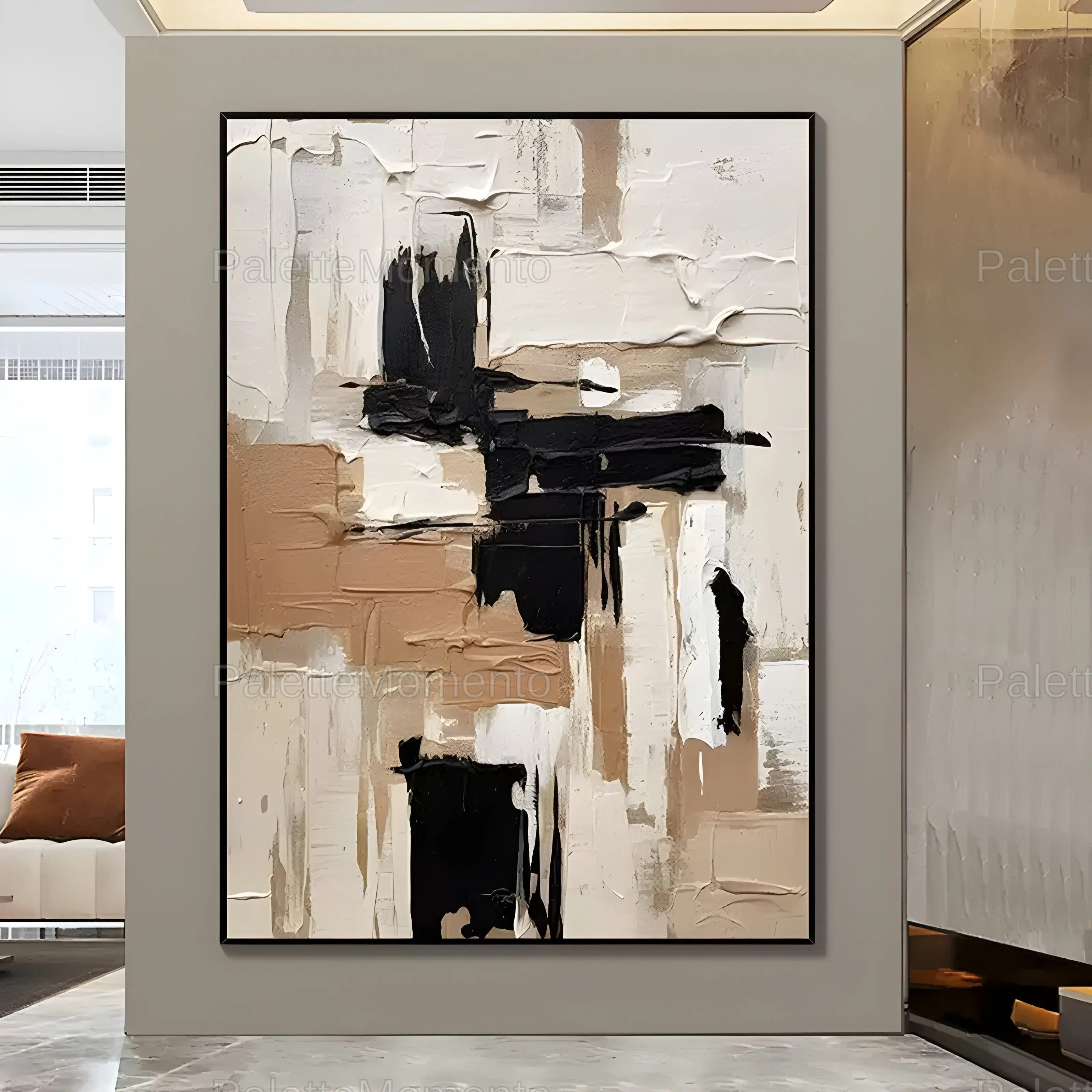
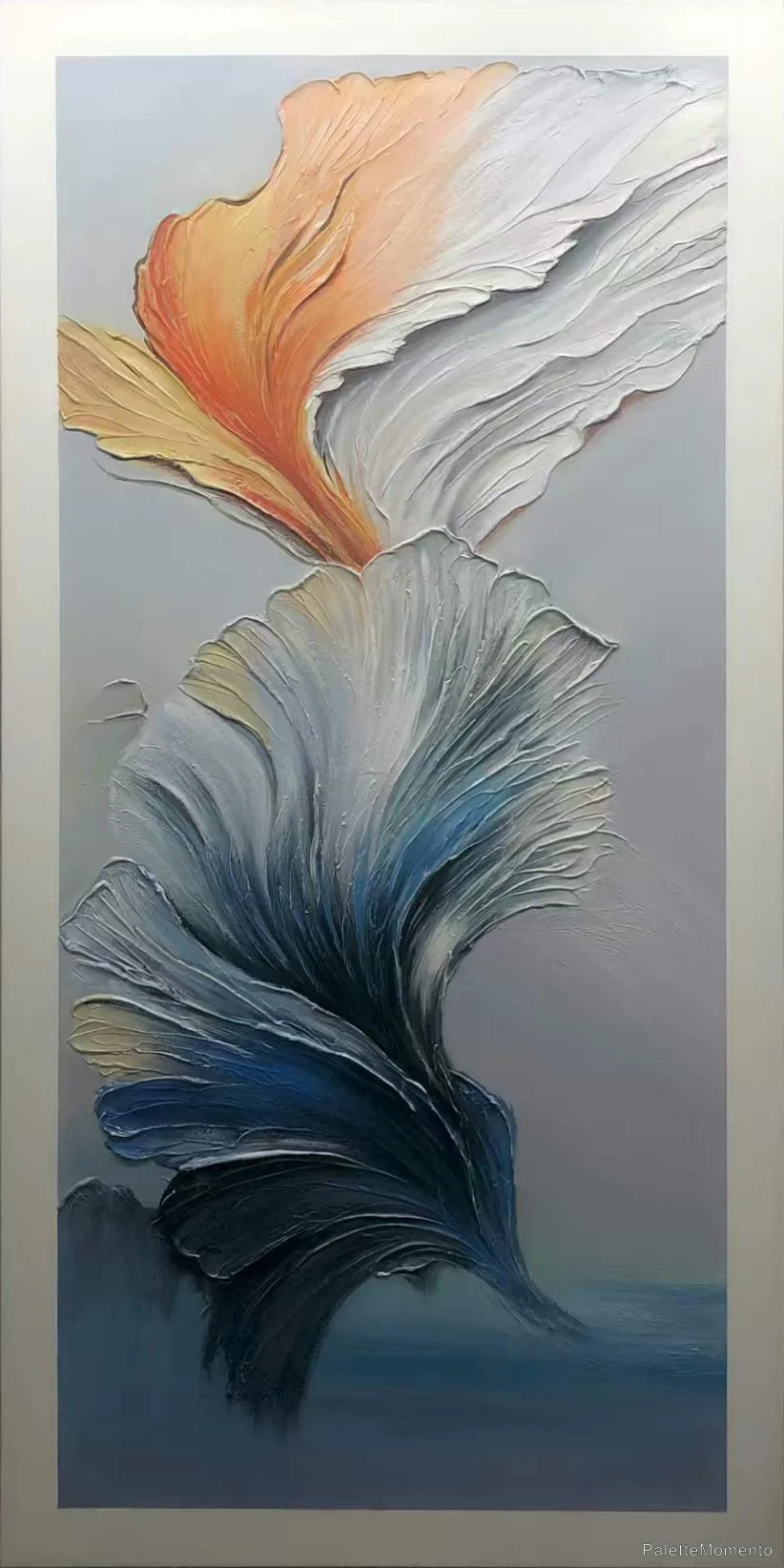
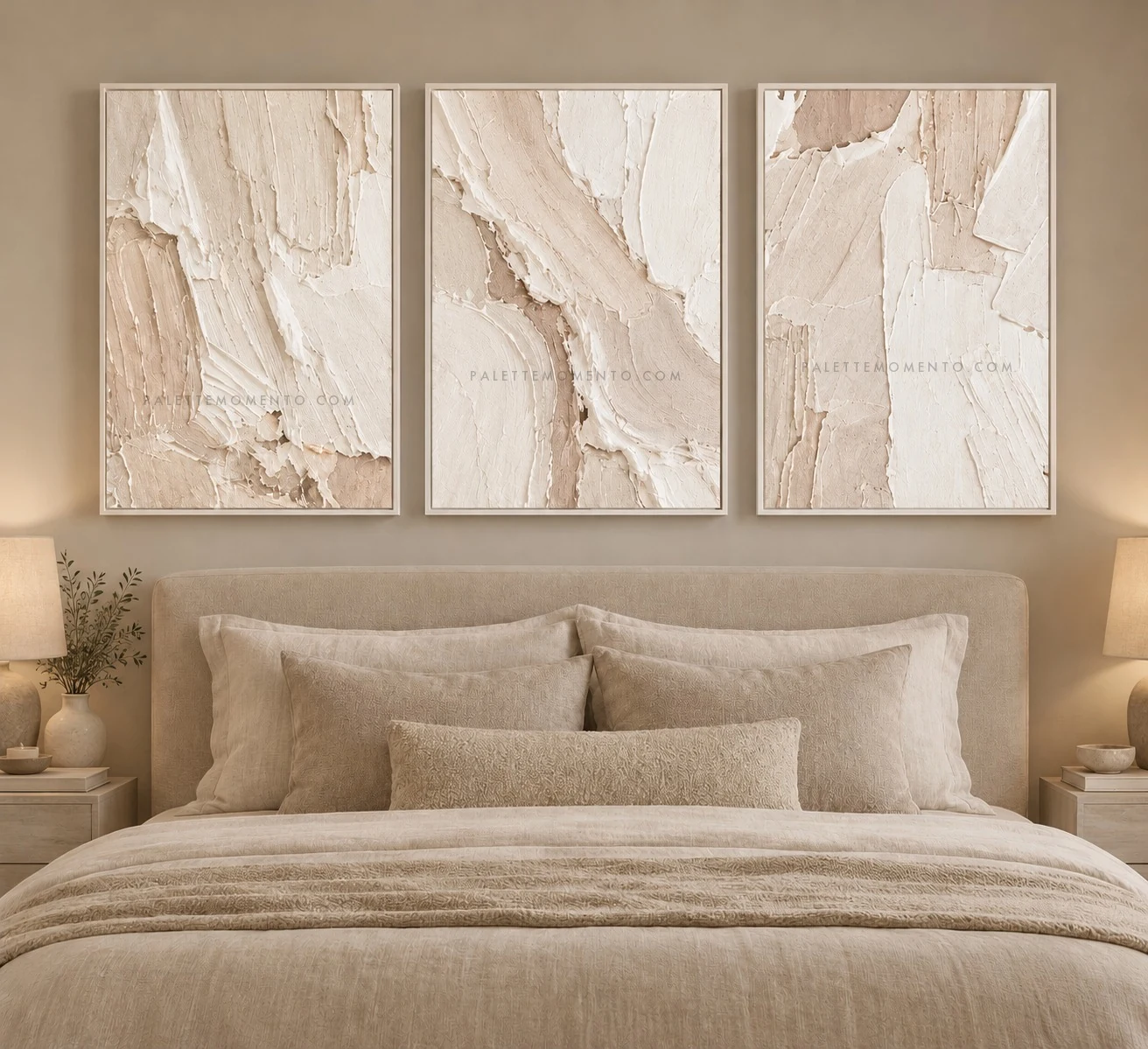
The client added this beige and cream textured triptych to an order that already included a 203 × 203 cm colorful wing painting. They wanted the three new canvases for a bedroom, using an AI-generated room image as the reference. We hand-painted each canvas in acrylic at 60 cm wide × 90 cm high and fitted the gold frames they requested.
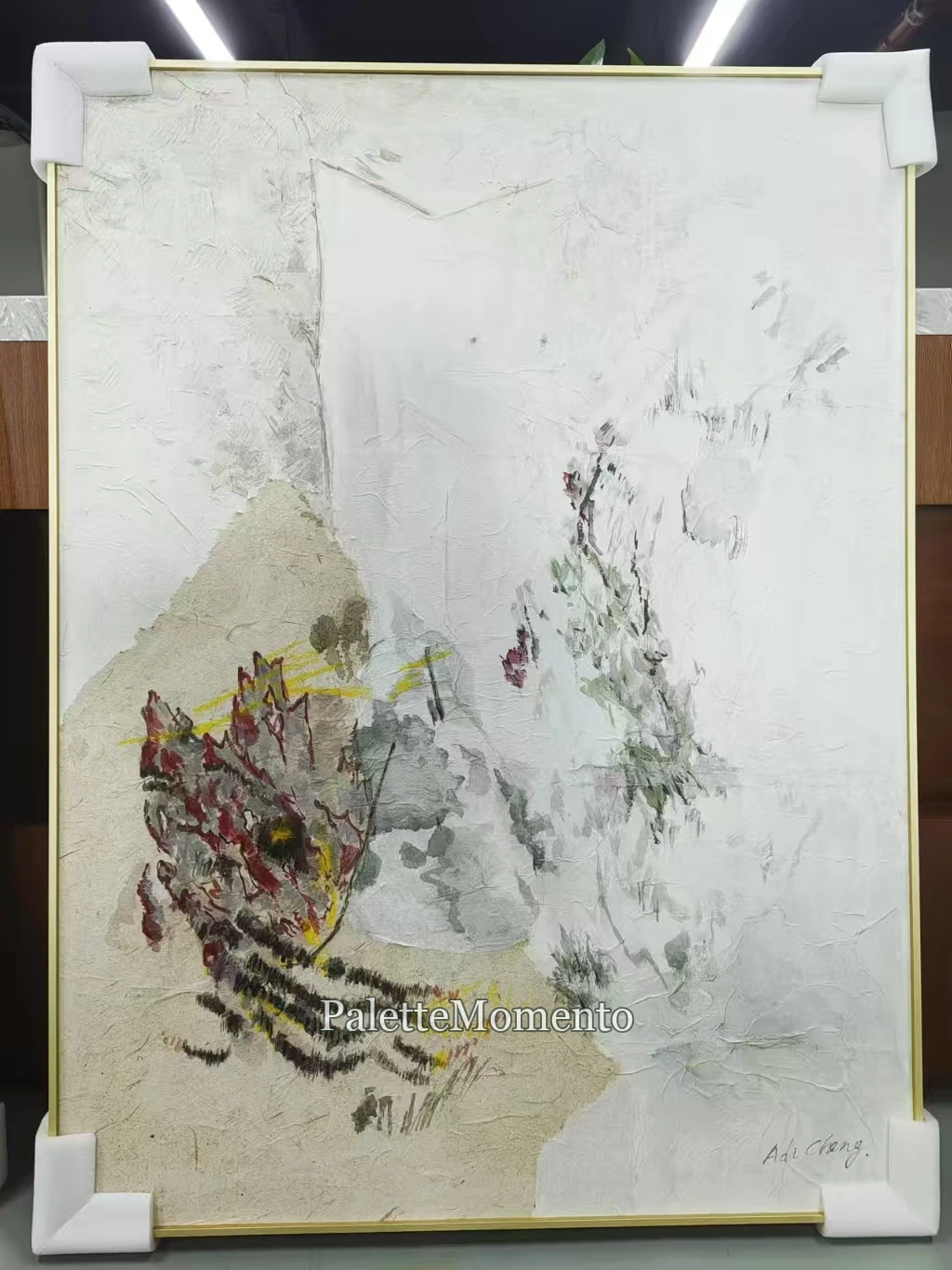
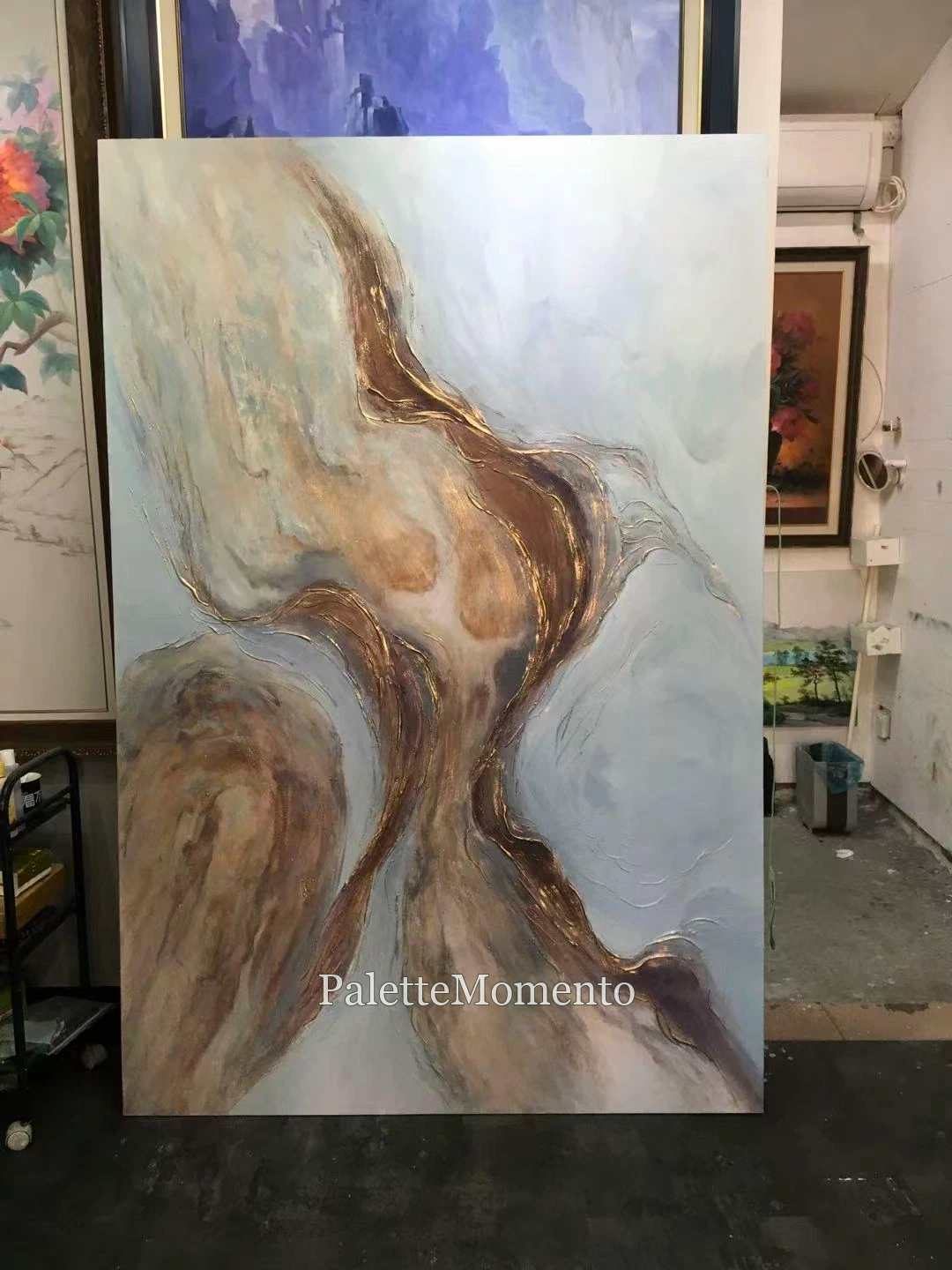
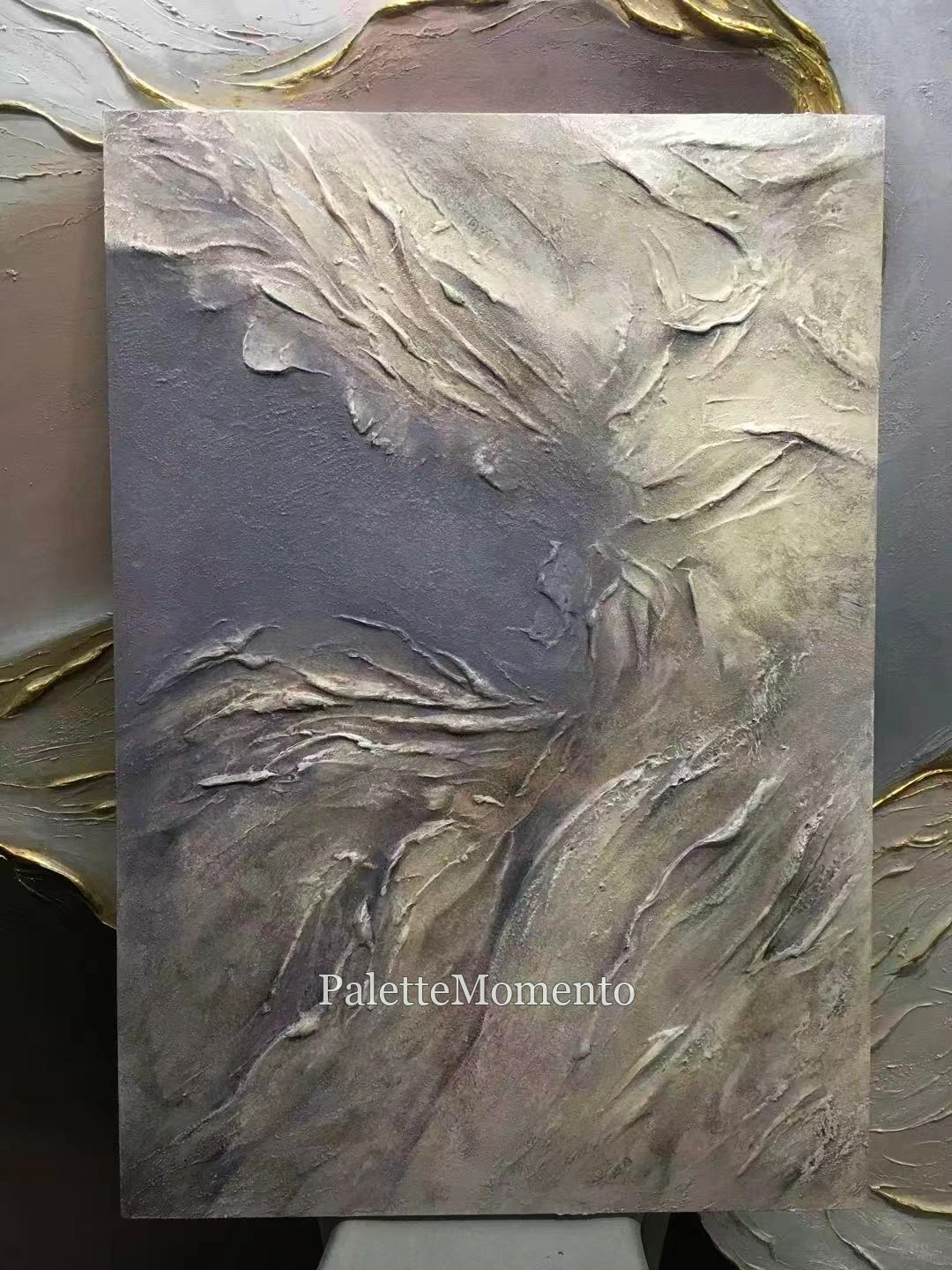
Shipping the large wing painting on its own would have been expensive. The progress photographs and videos we shared during production had also helped build the client’s trust, and they chose to add the three canvases. All four paintings were shipped together by sea to Dubai, sharing the freight cost across more pieces and reducing the average overall cost per painting.
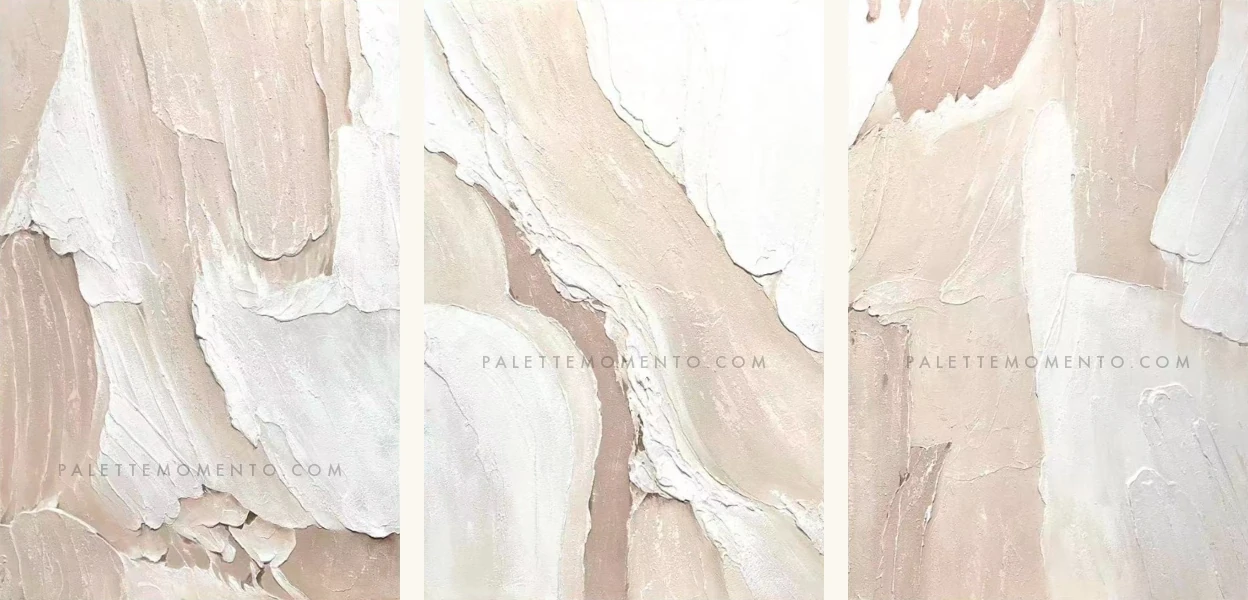
Turning the reference into a physical painting took more than matching the broad shapes. We enriched the surface to bring out its broken, irregular edges, then softened a local colour contrast on the right-hand panel after the client pointed it out.
Three panels · 60 × 90 cm each · Hand-painted acrylic on canvas · Bedroom commission · Client-requested gold frames · Five days of production · Shipped to Dubai by sea
Stage 1 — Drawing the three compositions
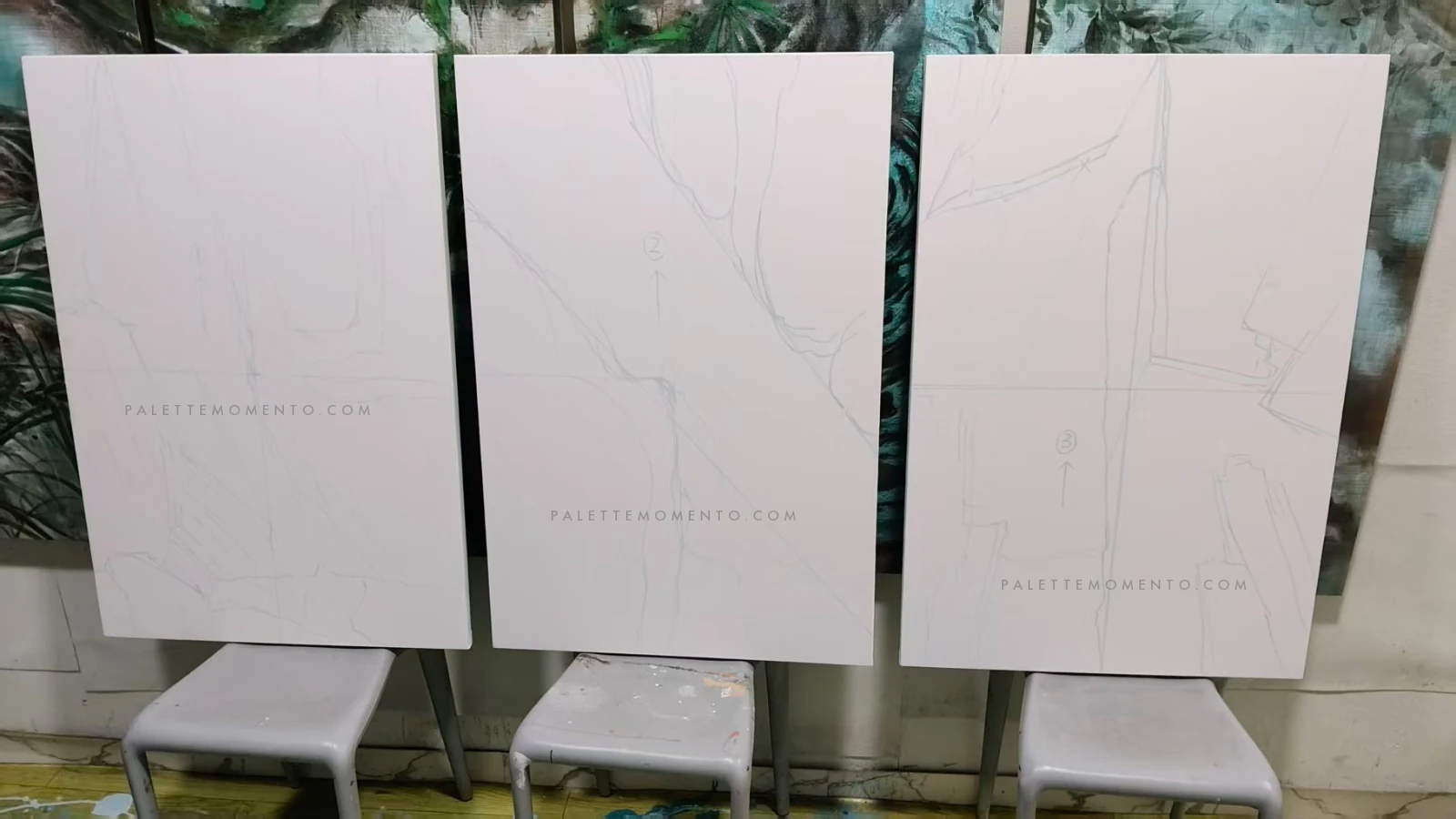
Mapping a different movement on each canvas
We began by drawing the main boundaries on the three blank canvases. The left panel has long vertical forms and smaller overlapping shapes near the bottom; a broad diagonal sweep crosses the centre panel; the right panel combines diagonal and upright shapes.
Setting out these three compositions gave us the boundaries to follow when building the raised surface.
Stage 2 — Building the raised surface
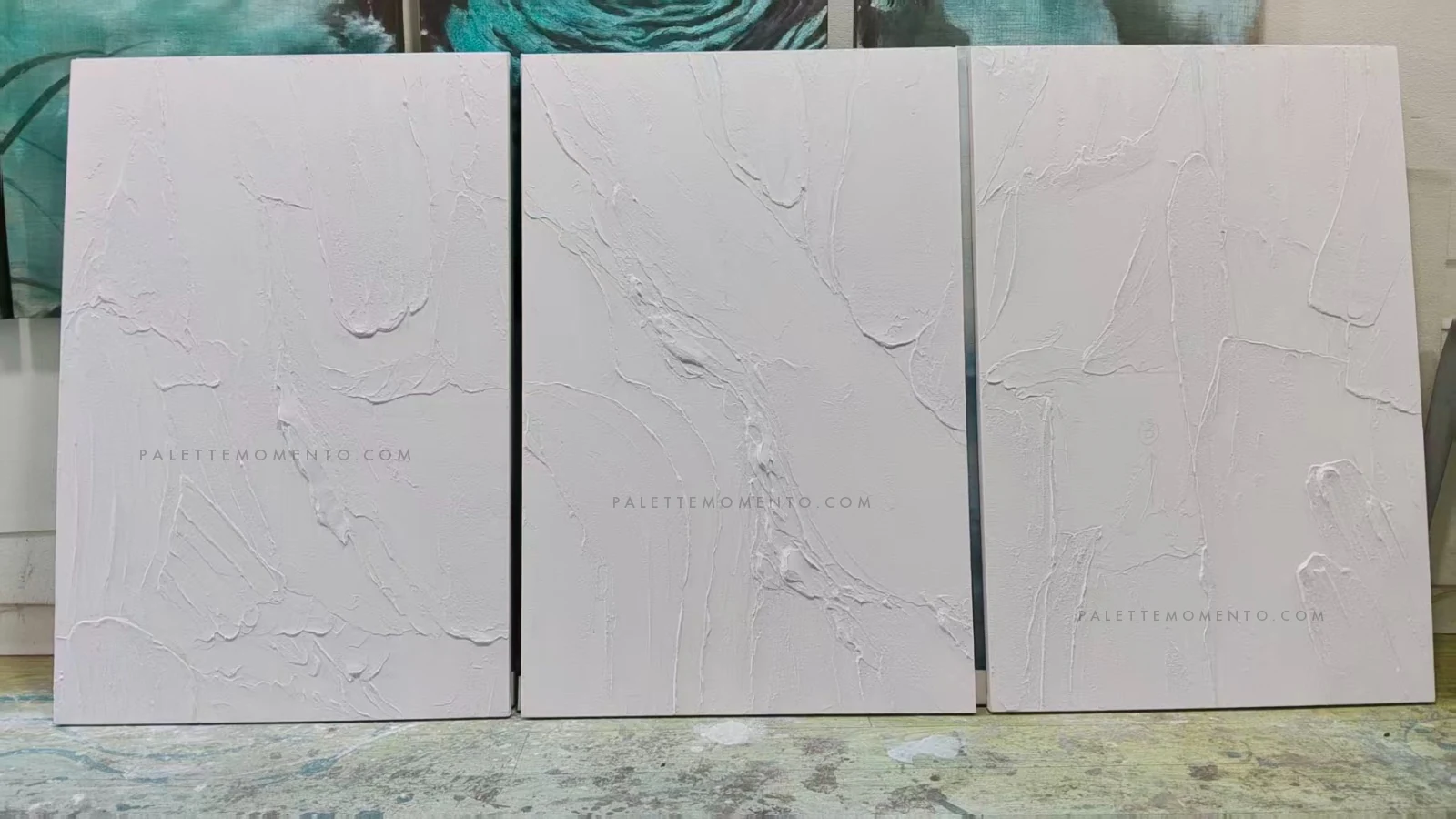
Forming the white textured relief
We built up the surface along the drawn shapes, forming broad raised areas with ridges and irregular edges. The curved boundary through the centre panel and the overlapping forms at the bottom of the left panel were already taking shape at this white stage.
This physical relief became the foundation for the later beige and cream painting.
Stage 3 — Adding beige and cream
Painting colour around the raised shapes
We introduced warm beige across the long vertical areas and the central diagonal sweep, keeping neighbouring areas cream and white. The raised edges remained visible as the three canvases gained their colour.
At this point, the painted surface still had broader, smoother passages than the fragmented effect in the AI reference. We continued refining that difference in the next stage.
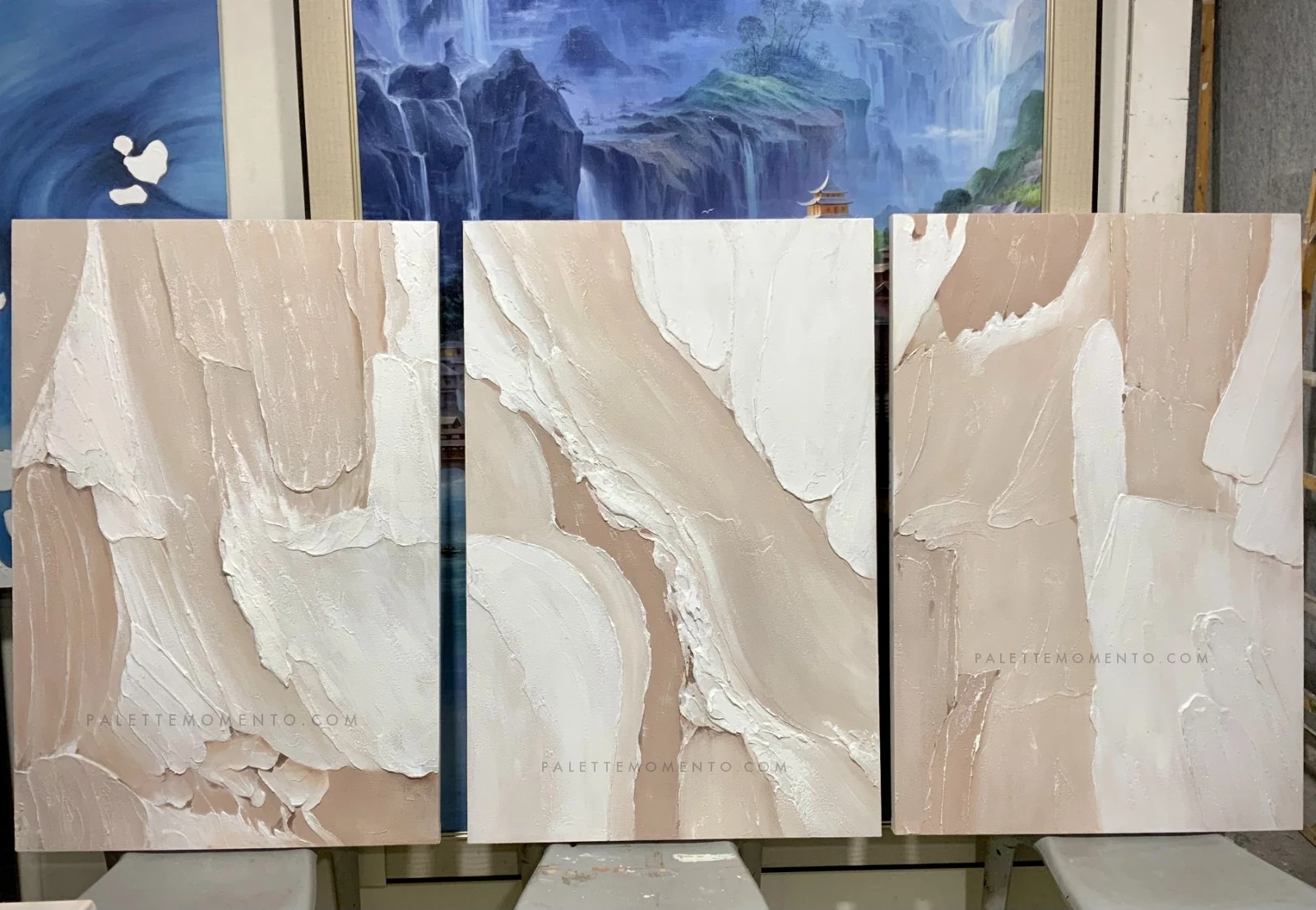
Stage 4 — Enriching the texture
Breaking up the broad passages with finer surface detail
Our artist went back into the beige and cream areas to enrich the texture. Smaller pale marks and more varied, irregular edges broke up the broad passages while keeping the three main compositions.
The aim was to bring more of the reference’s fragmented character into real acrylic texture. The close views below show the raised boundaries and smaller surface variations during this refinement.
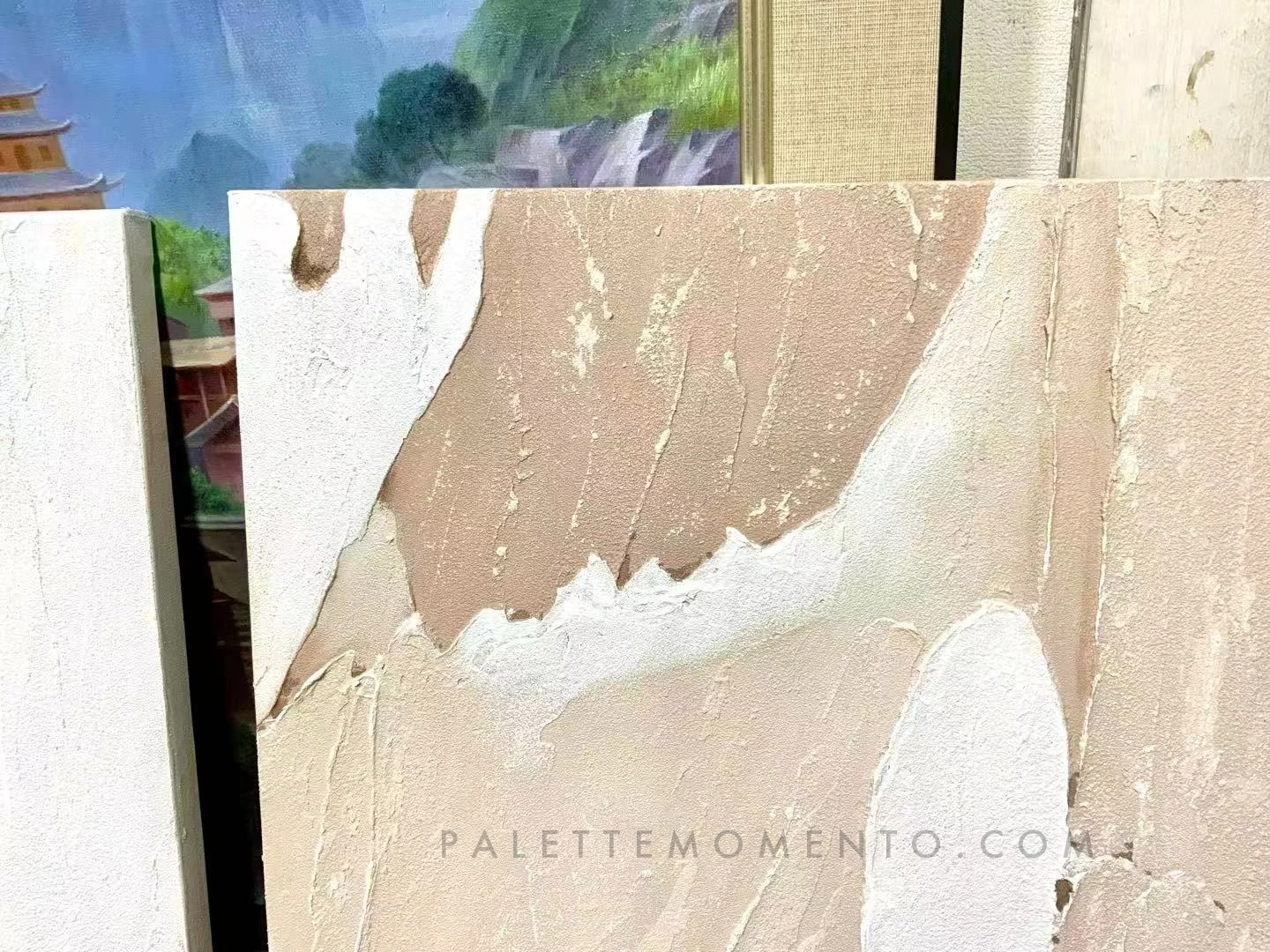
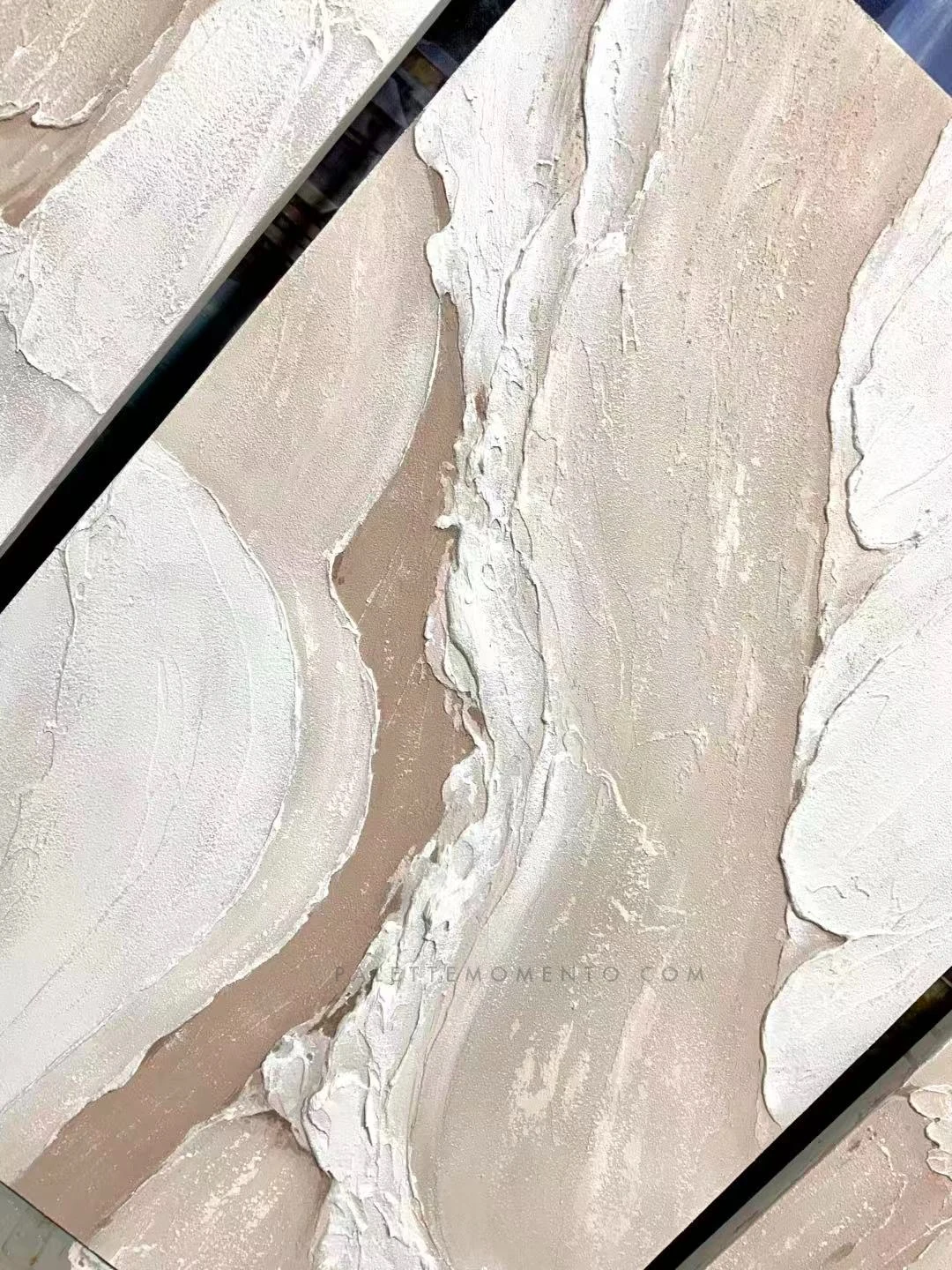
Stage 5 — Responding to the client
Softening an abrupt contrast on the right panel
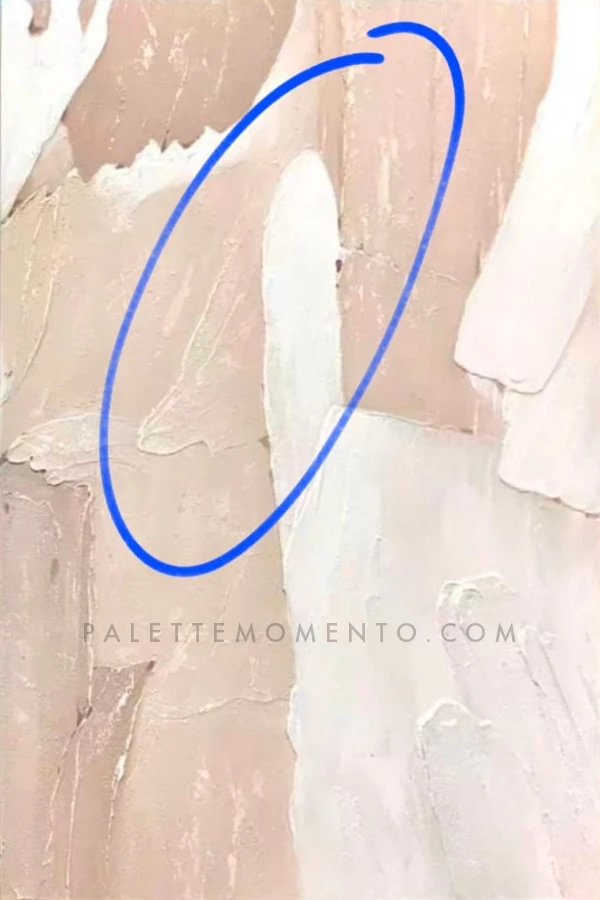
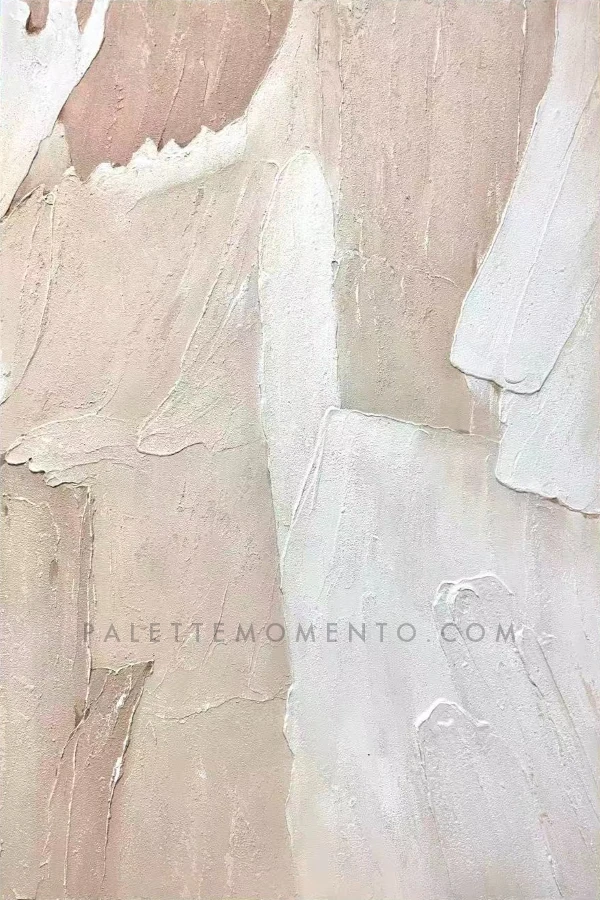
During the process, the client marked an area of the right-hand canvas that felt unusual. The colour contrast around the narrow upright pale shape stood out too abruptly from the surrounding beige.
We adjusted it promptly, softening the nearby colour transition so that the pale form sat more gently within the panel. The raised shape remained; the change addressed how strongly it contrasted with the surrounding paint.
Stage 6 — The completed triptych
Three finished beige and cream acrylic canvases
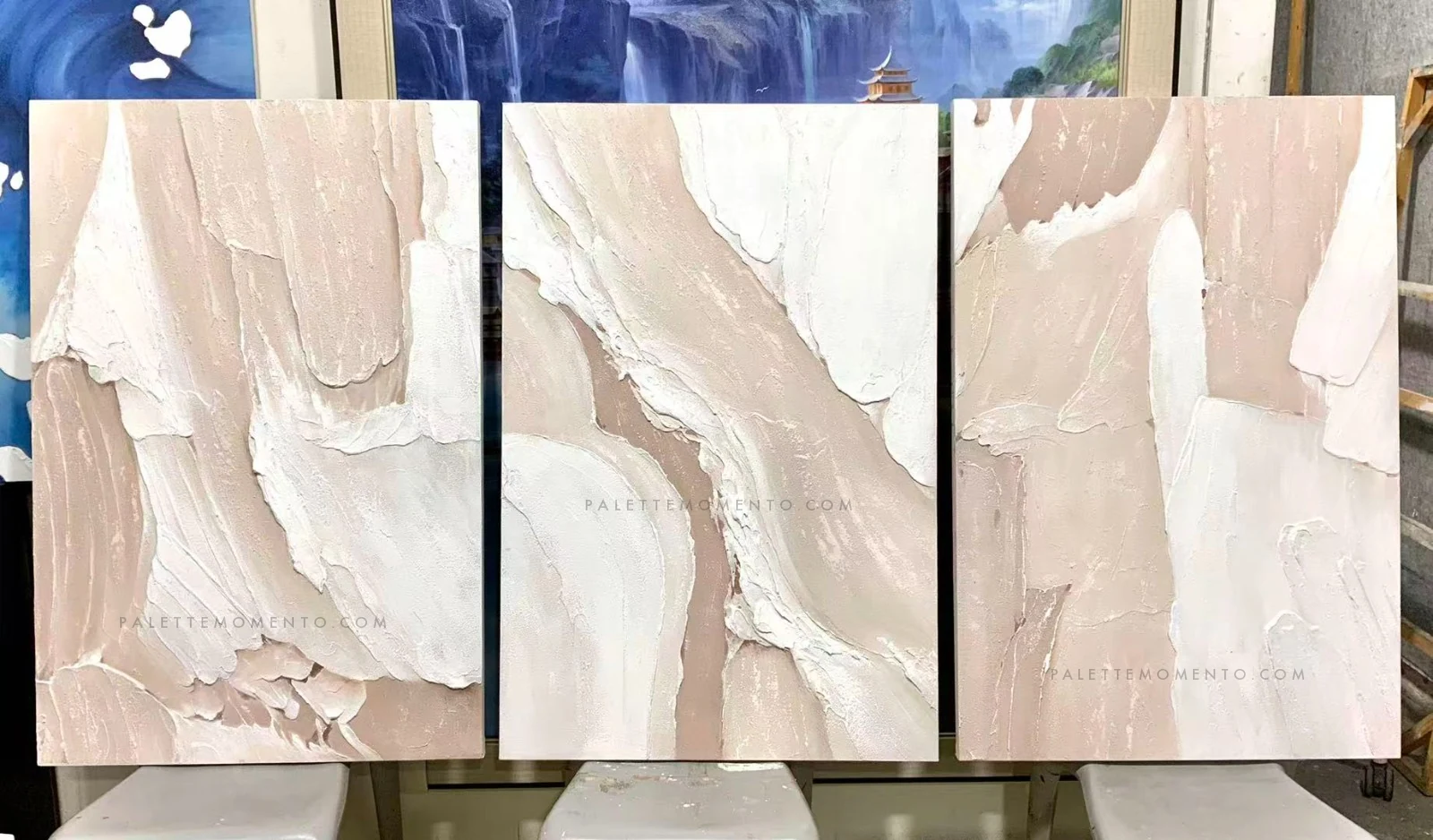
The completed set brings together the left panel’s overlapping forms, the centre panel’s sweeping diagonal and the revised right-hand composition. Each canvas retains its own pattern of raised cream and white areas against warm beige.
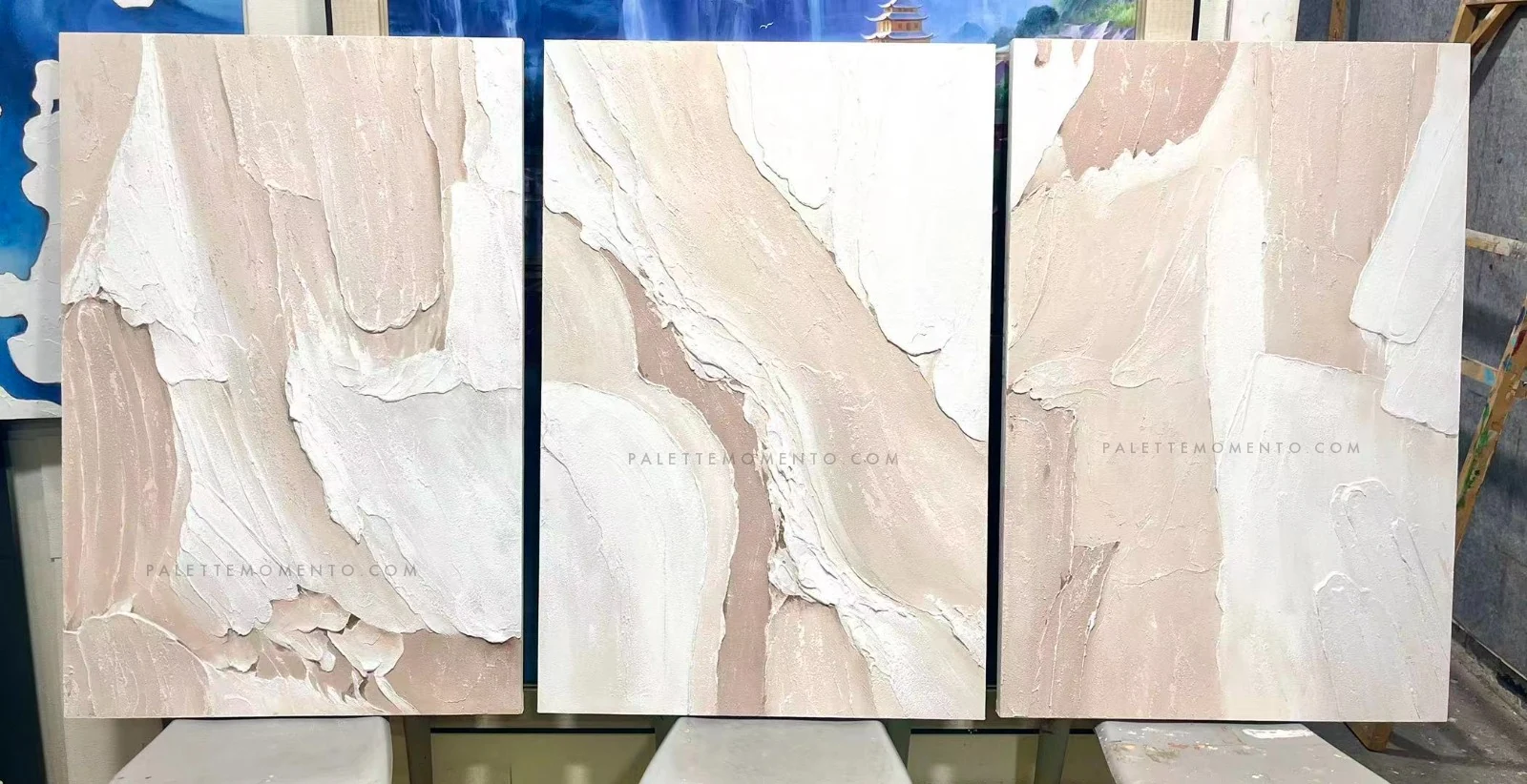
This commission took approximately five days to make. Each of the three hand-painted acrylic canvases measures 60 cm wide × 90 cm high.
Stage 7 — Framing the finished canvases
Fitting the gold frames requested by the client
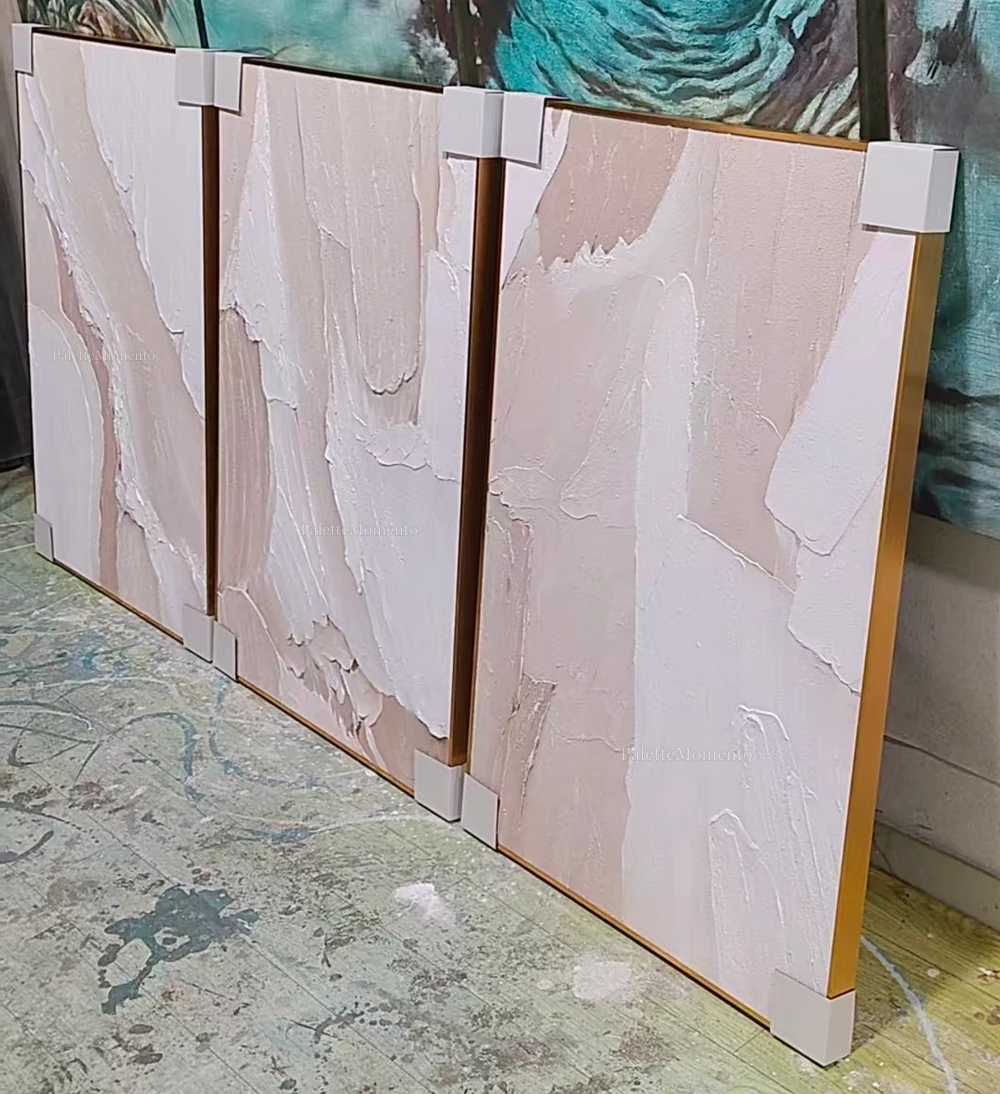
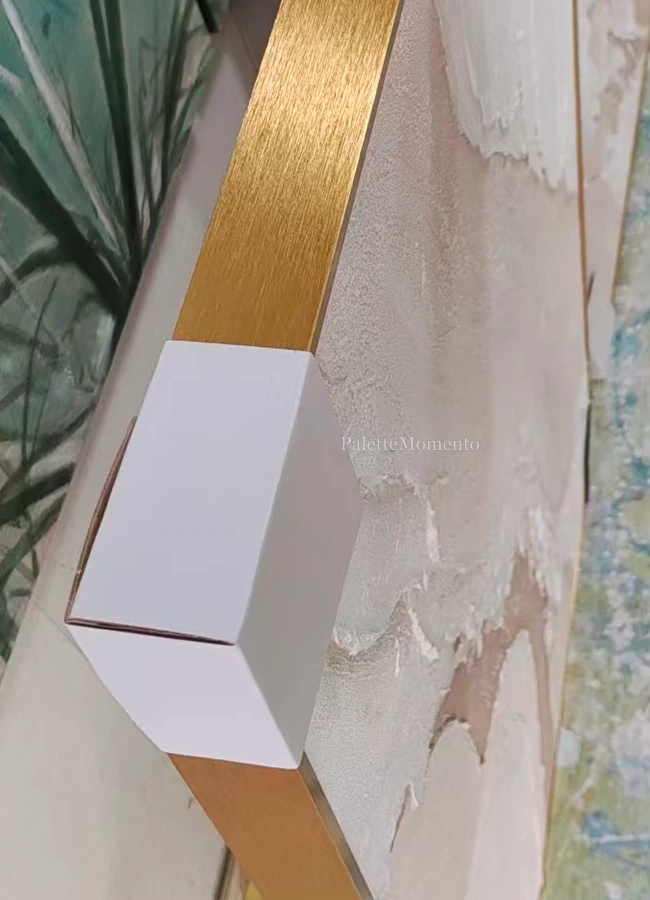
We fitted the three finished canvases with the gold frames the client had specified. The slim gold-coloured edges surround the beige and cream paint, with the raised acrylic texture visible inside each frame.
The completed set is shown together below, followed by an angled view of the frame depth and a close view of the gold finish. White corner protectors are in place on the framed canvases.
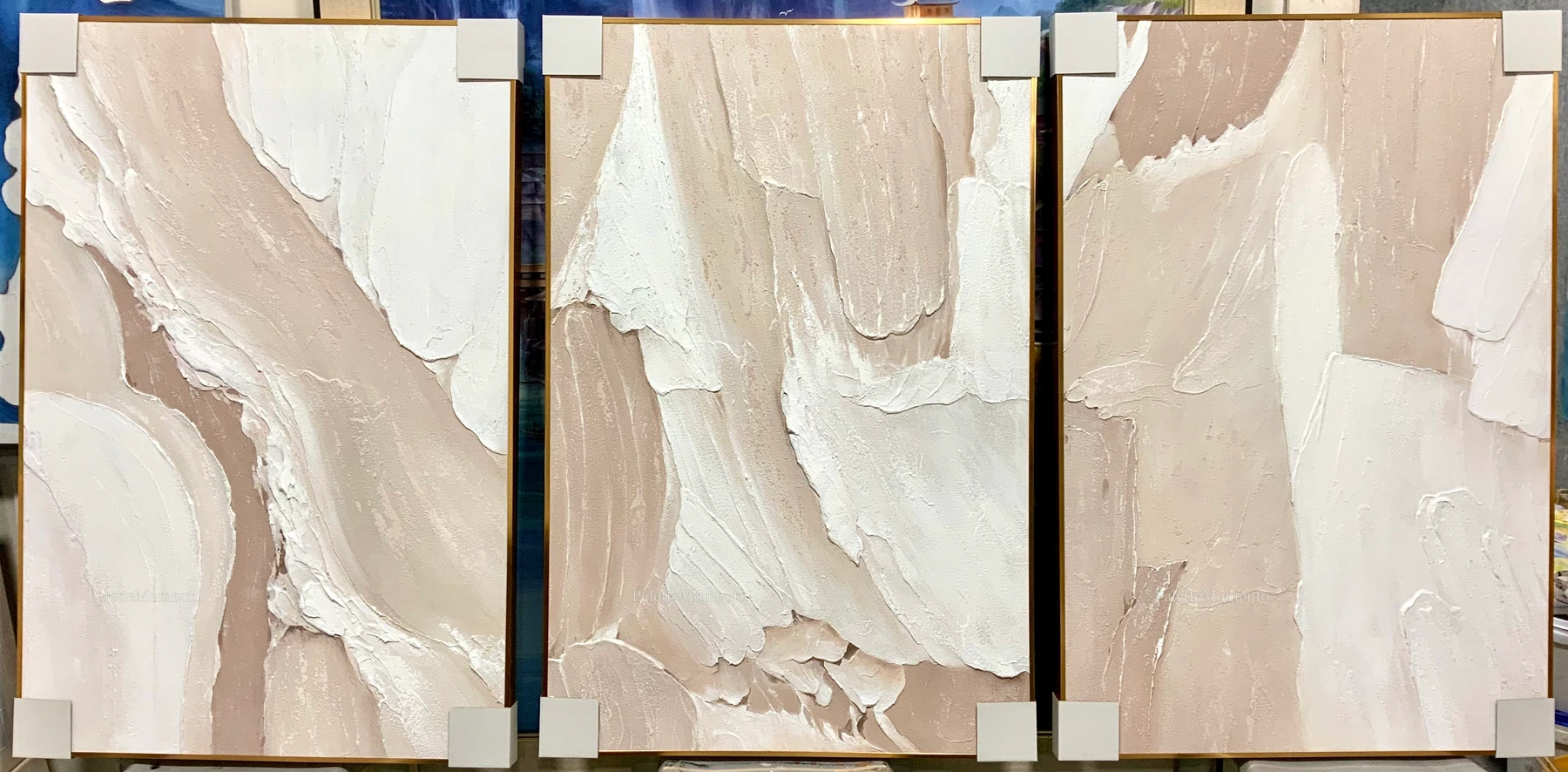
Shipped to Dubai, United Arab Emirates. The gold-framed triptych and the large wing painting from the same client’s order were sent together by sea.
Discuss your own commission
Plan a textured triptych for your room
Send your reference, the image width and height for each panel, your preferred colours and the texture details you would like to retain or change. We can discuss how to translate an AI image or another reference into a hand-painted set.
Discuss your triptych on WhatsAppWhatsApp: usually an immediate reply.
Email: usually within 12 hours.
support@palettemomento.com