Hand-painted to orderTrade pricing from one pieceWhatsApp: usually instant replies

WhatsAppsupport@palettemomento.com

Hand-Painted to Order  ·  Trade Pricing From One Piece  ·  WhatsApp: Usually Instant Replies
Textured & Plaster

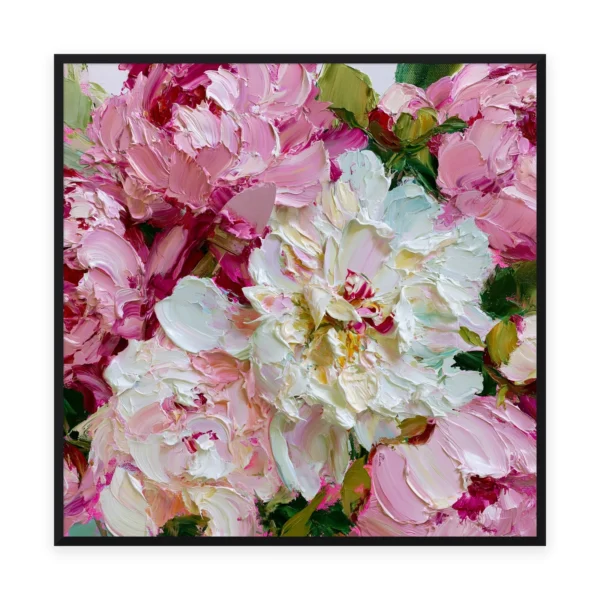
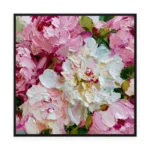
Heavy impasto blush peony relief canvas TA19
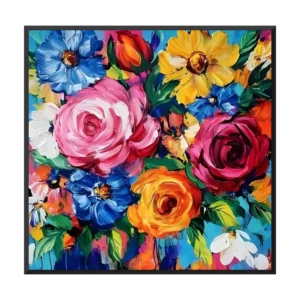
Trade pricing on request
You may also like
Sizes made to order 10 standard
  • 24"x 24"61x 61 CM
  • 30"x 30"76x 76 CM
  • 32"x 32"81x 81 CM
  • 36"x 36"91 x 91 CM
  • 40"x 40"102 x 102 CM
  • 44"x 44"112 x 112 CM
  • 48"x 48"122 x 122 CM
  • 55"x 55"140 x 140 CM
  • 60"x 60"153 x 153 CM
  • 72"x 72"183 x 183 CM

Any size outside this list is produced to your dimensions at the same rate.

Finish
Rolled CanvasRolled Canvas
Frameless StretchedFrameless Stretched
Black FrameBlack Frame
White FrameWhite Frame
Wood FrameWood Frame
Silver FrameSilver Frame
Gold FrameGold Frame
Minimum order
None. Trade pricing from one piece.
Production
7 to 10 business days for 1 to 5 pieces, 10 to 15 for 6 to 20, 15 to 20 for 21 to 50, 20 to 30 for 51 to 100.
Delivery
Prices are EXW our Shenzhen studio. Collect with your own forwarder, or ask us to arrange freight and we quote it separately.
Made
Hand-painted in oil and acrylic on canvas. Nothing printed, nothing stock.
Customization
Color match, your own reference or photograph, added personal elements.
Get a Quote on WhatsApp

WhatsApp: usually an immediate reply. Email: usually within 12 hours.

Or email support@palettemomento.com

Working with our studio

We paint every piece to order in Dafen, Shenzhen, so the size, the palette and the finish are all decided by your project rather than by what happens to be in stock. You see photographs of the finished canvas before it ships, and nothing leaves the studio until you approve it. Trade pricing starts at one piece, and the rate improves as the count goes up.
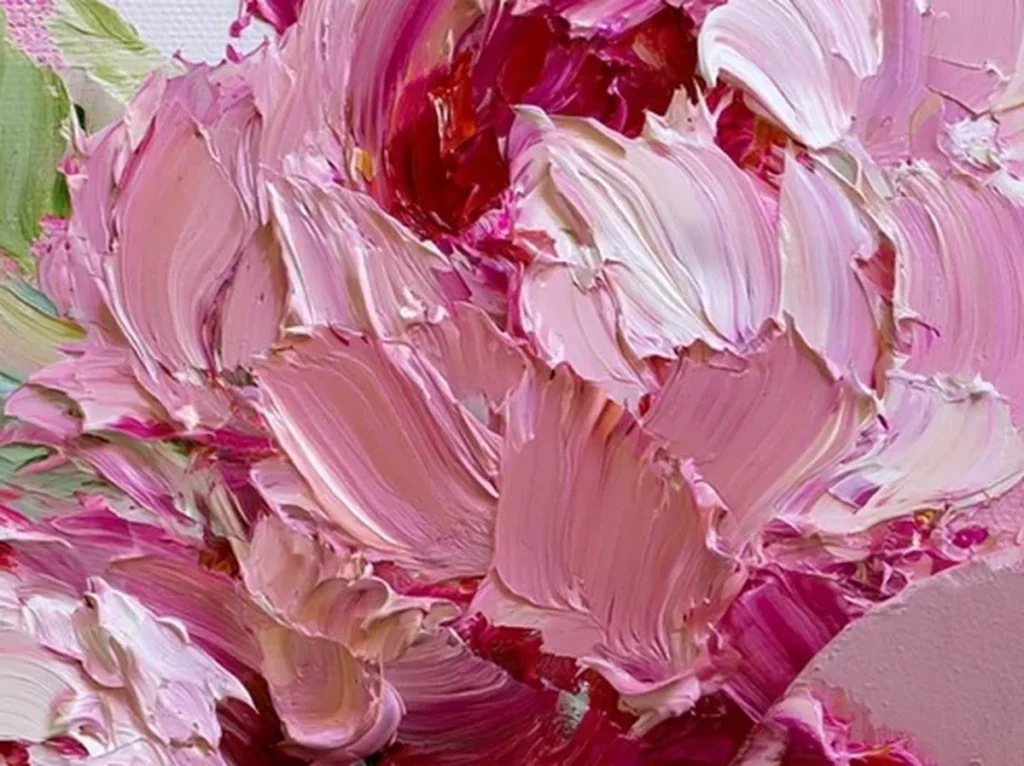
Close-up of the impasto white peony at the center of the blush peony canvas TA19, showing thick curved knife strokes in cream, blush pink, and green.

The restrained palette of this peony painting

For all its thick texture, this peony painting is built on a deliberately small palette. It holds blush pink, cream white, and soft green, with tiny crimson hearts at the centers of the flowers. The large white peony in the middle is given room to sit as the calm center, while the pink blooms gather around it rather than crowding it out. In the upper left corner a patch of pale lilac ground is left mostly bare, which gives the eye a quiet place to rest. That restraint in color is what keeps a heavily worked, petal-packed surface feeling soft rather than busy.

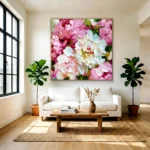
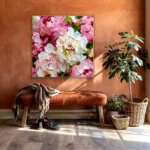
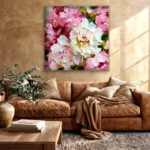
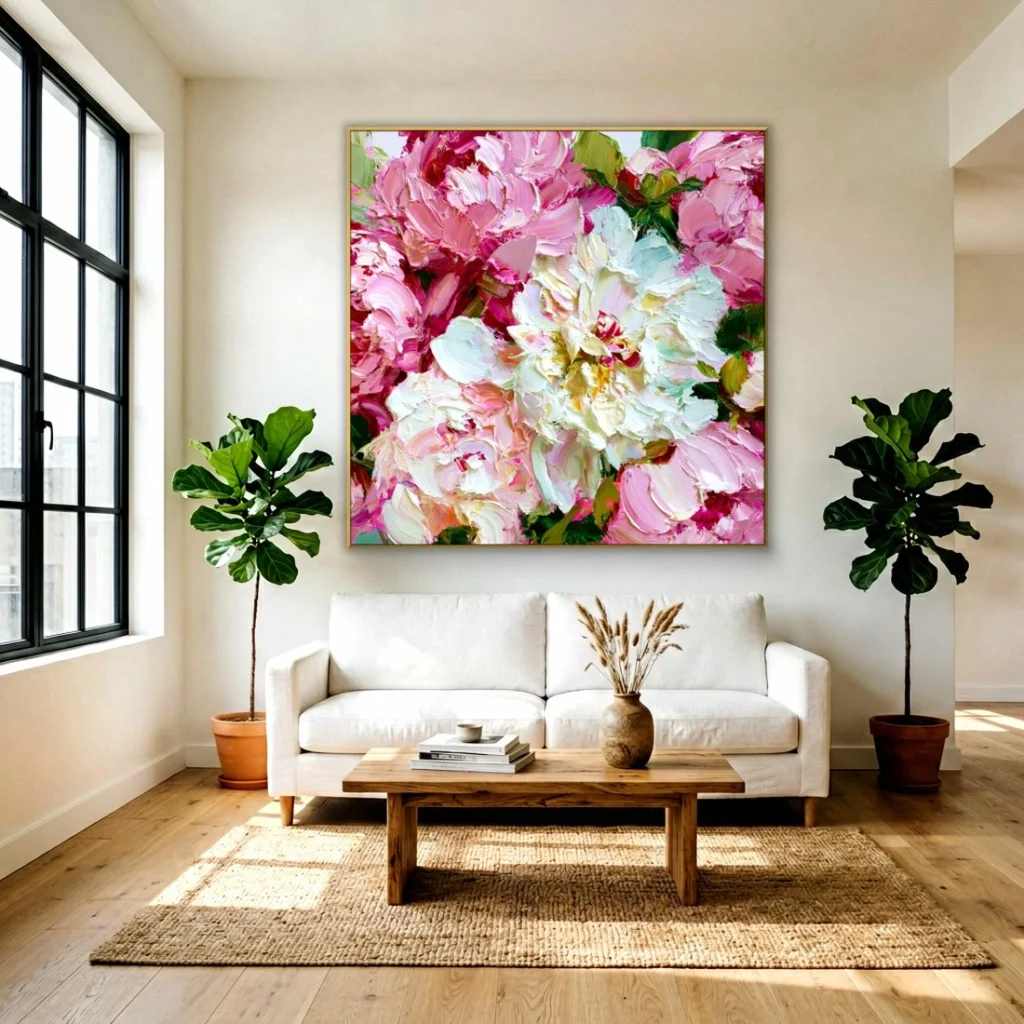
Heavy impasto blush peony relief canvas in a bright living room

Where this peony canvas fits your decor

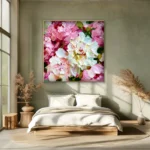
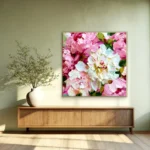
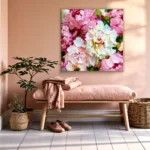
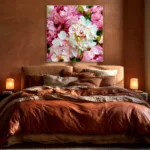
The soft, romantic feel of these peonies makes the piece easy to place in several looks. In a japandi or organic modern room it sits well next to natural oak, linen, and stone, where its texture matters more than its color. In a more classic or romantic bedroom it leans into the traditional side of peonies, pairing with cream bedding and warm wood. Because the palette stays in blush pink and white, it does not fight soft neutral schemes the way a bolder floral would. This flexibility is why pink and white peony wall art works in a bedroom, a living room, or over a dining sideboard.

First strokes of a made-to-order painting taking shape on the studio easel

Repeating this peony design across a set of rooms

Each canvas is hand painted on its own, so small differences appear from one piece to the next in a run. The bloom keeps its size and position on every canvas and the blush pink holds the same softness, so a set of them hangs together across a floor. The petal edges and the height of the ridges are where variation shows, and it sits inside a normal and acceptable range. If a project needs them closer, we paint the run against one reference canvas.

Production time for this design

Peony petals are built up in heavy passes, so drying time drives the schedule here more than painting time. Count on roughly ten business days for one to five pieces, and about fifteen for a run of twenty. A quieter palette does not run faster, because the work is in the relief rather than the color. If the date matters more than the design, tell us and we can point you to a piece in the catalog that runs quicker.

The impasto tradition behind this blush peony painting

The petals in this painting are not smoothed flat, but built from thick, curved strokes of paint that stand off the canvas. That way of working has a long history. When the Impressionists took their easels outdoors in the 1870s, they began breaking flowers and light into separate strokes of color rather than blending everything smooth. Van Gogh pushed the paint thicker still, until it stood in visible ridges, a technique now called impasto, from the Italian word for paste. This blush peony canvas belongs to that line, since its petals are shaped by the knife itself rather than drawn with a fine brush.

Where this textured peony canvas sits in that tradition

This piece keeps the old idea of shaping form with thick paint, while pushing the relief further than a nineteenth-century canvas usually did. The white peony at the center is built in curved knife strokes you could almost read with a fingertip, closer to contemporary textured wall art than to a museum still life. The subject stays timeless, though, since peonies and roses have been painted for centuries as symbols of abundance. What is modern here is the heaviness of the paint, not the flowers themselves.

The composition of this pink and white peony painting

The arrangement is anchored by the large cream-white peony just below the center, which holds the lightest color and draws the eye first. Around it, deeper rose-pink blooms gather in the upper left and along the right, so the pale flower stays framed rather than lost. Green leaves and a few unopened buds fill the gaps, keeping the pinks from blending into one soft mass. The upper left corner is left quieter, with a patch of pale lilac ground, which gives the packed arrangement somewhere to breathe. The eye tends to start at the white bloom, then circle out through the pinks and back again.

How this 3D peony textured wall art is made

The surface is real paint relief, not a printed texture effect. The canvas is primed with gesso first, which gives the paint grip and helps protect against cracking as it ages. The background greens and pale ground go on early and are left to dry, so they sit behind the flowers as a settled base. The peony petals are then layered over that cured ground with a palette knife, each thick stroke left standing so its edge stays raised. This kind of building has to dry over days rather than hours, and only after a full cure is the canvas packed, which is why the petals catch the light the way real flowers do.

The best rooms for a soft pink and white floral painting

A quiet, romantic palette like this one belongs where calm matters most. In a bedroom it suits the mood of the room without adding color noise, which makes it a natural for pink and white peony wall art above a bed or dresser. It also works in a living room or over a dining sideboard, wherever a soft floral can warm the space. Peonies pair especially well with japandi or organic modern interiors, next to natural wood, linen, and stone, since there the heavy texture is the main event. Soft side lighting suits it best, because a lamp or a nearby window makes every raised petal cast a small shadow.

Pairing and sizing

Curious what to hang beside this blush peony? The pink, orange, and red dahlia canvas (TA18) shares the same warm pink family in thick knife-built petals, so the two blooms feel closely related. The green and red rose canvas (TA22) adds fresh green leaves for contrast, which makes the soft blush tones here stand out.

For placement above a bed or console, pick a width close to two-thirds of the furniture below, and center the canvas about 57 to 60 inches off the floor. Each size is painted to order, so you approve photos of your finished piece before it ships.

Frequently asked questions

What flowers are in this painting?

These are peonies, painted as a close, full arrangement. A large cream-white peony sits at the center, surrounded by blush and deep rose-pink blooms, with green leaves and a few unopened buds worked in between. The palette stays soft, in pink, white, and green, with only small crimson hearts at the flower centers.

What wall color goes with a blush pink and white peony painting?

Warm white, cream, and soft greige keep the room in the same gentle register and let the pale peony stay the focus. A very soft sage or blush wall can work too, since both colors already appear in the painting. Strong or dark walls tend to overpower a piece this quiet, so test a swatch in your own light first.

Can the colors be repainted to suit the room?

Yes. Since each canvas is painted by hand to order, the pinks can deepen toward rose or soften toward ivory, whichever suits the space. We repaint it to your direction rather than filtering a stock image, so the piece is genuinely made for the room.

Which rooms suit this soft peony canvas?

Bedrooms first, where a calm, romantic feel matters most, then living rooms and dining walls that want a soft floral. It also fits japandi and organic modern spaces, where the heavy texture can be seen up close. Keep it out of harsh overhead light so the raised petals keep their shadow.

Can hotels and designers order this blush peony direct from the studio?

Yes. We paint it in Dafen Art Village and supply trade buyers directly, with no reseller in between. The blush can be softened or warmed for a scheme, and a run for several rooms is painted against one reference canvas so the set holds together.

Will my canvas match the photo exactly?

Very closely, though not stroke for stroke, since every peony is shaped by hand with a knife. That small variation is what marks it as an original painting rather than a print. You receive photos of your own finished canvas for approval before it ships.

How do I care for the thick peony texture?

Dust it occasionally with a dry, soft brush, and keep damp cloths off the raised petals. Avoid long hours of hard, direct sun, which can age any oil surface over time. With that light care the impasto keeps its ridges and soft shadows for many years.

What makes an impasto peony painting different from a print?

A print is flat, so the petals are only a photograph of texture. This peony canvas is built from real paint that stands off the surface, which means each ridge casts its own small shadow and shifts as the light moves through the day. That physical relief is the main reason a hand-painted floral feels different on the wall.

Trade specification

How this piece is made and supplied

Made
Hand-painted to order in our studio in Dafen Art Village, Shenzhen. Nothing printed, nothing held in stock.
Sizes
Any size and any orientation. If the size you need is not listed on this page, we paint to your measurements at the same rate.
Materials
Artist grade oil and acrylic on cotton, poly cotton or premium linen canvas, mounted on solid wood bars.
Finishes
Rolled in a tube, stretched frameless, or framed in black, white, wood, silver or gold. All five frame colors are one price.
Make it yours
Any design in the catalog can carry your own elements. Shift the palette to a scheme, add a small detail, or work from your own reference or photograph.
Before it ships
We photograph every finished canvas and send it to you. Nothing leaves the studio until you approve it.
Trade terms
No minimum order and trade pricing from one piece. Prices are EXW our Shenzhen studio, so freight is quoted separately once we know where the work is going.
Get a Quote on WhatsAppWhatsApp: usually an immediate reply. Email: usually within 12 hours.