Hand-painted to orderTrade pricing from one pieceWhatsApp: usually instant replies

WhatsAppsupport@palettemomento.com

Hand-Painted to Order  ·  Trade Pricing From One Piece  ·  WhatsApp: Usually Instant Replies
Wabi-Sabi

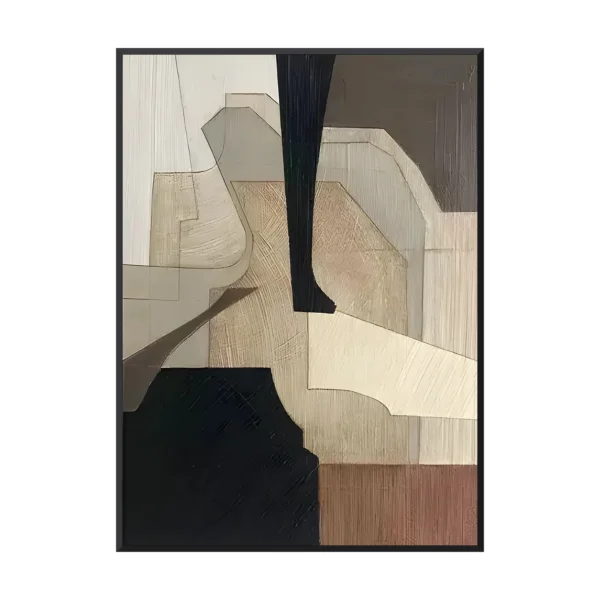
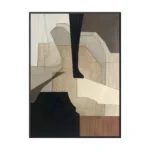
Tan and black earthy geometric wabi-sabi canvas WA08
Trade pricing on request
You may also like
Sizes made to order 14 standard
  • 24"Hx 20"W61 x 51 CM
  • 32"Hx 24"W81 x 61 CM
  • 36"Hx 24"W91 x 61 CM
  • 40"Hx 30"W102 x 76 CM
  • 48"Hx 32"W122 x 81 CM
  • 48"Hx 36"W122 x 91 CM
  • 54"Hx 36"W137 x 91 CM
  • 54"Hx 40"W137 x 102 CM
  • 60"Hx 40"W153 x 102 CM
  • 64"Hx48"W163 x 122 CM
  • 72"Hx 48"W183 x 122 CM
  • 72"Hx 54"W183 x 137 CM
  • 80"Hx 53"W203 x 135 CM
  • 80"Hx 60"W203 x 153 CM

Any size outside this list is produced to your dimensions at the same rate.

Finish
Rolled CanvasRolled Canvas
Frameless StretchedFrameless Stretched
Black FrameBlack Frame
White FrameWhite Frame
Wood FrameWood Frame
Silver FrameSilver Frame
Gold FrameGold Frame
Minimum order
None. Trade pricing from one piece.
Production
7 to 10 business days for 1 to 5 pieces, 10 to 15 for 6 to 20, 15 to 20 for 21 to 50, 20 to 30 for 51 to 100.
Delivery
Prices are EXW our Shenzhen studio. Collect with your own forwarder, or ask us to arrange freight and we quote it separately.
Made
Hand-painted in oil and acrylic on canvas. Nothing printed, nothing stock.
Customization
Color match, your own reference or photograph, added personal elements.
Get a Quote on WhatsApp

WhatsApp: usually an immediate reply. Email: usually within 12 hours.

Or email support@palettemomento.com

Working with our studio

We paint every piece to order in Dafen, Shenzhen, so the size, the palette and the finish are all decided by your project rather than by what happens to be in stock. You see photographs of the finished canvas before it ships, and nothing leaves the studio until you approve it. Trade pricing starts at one piece, and the rate improves as the count goes up.
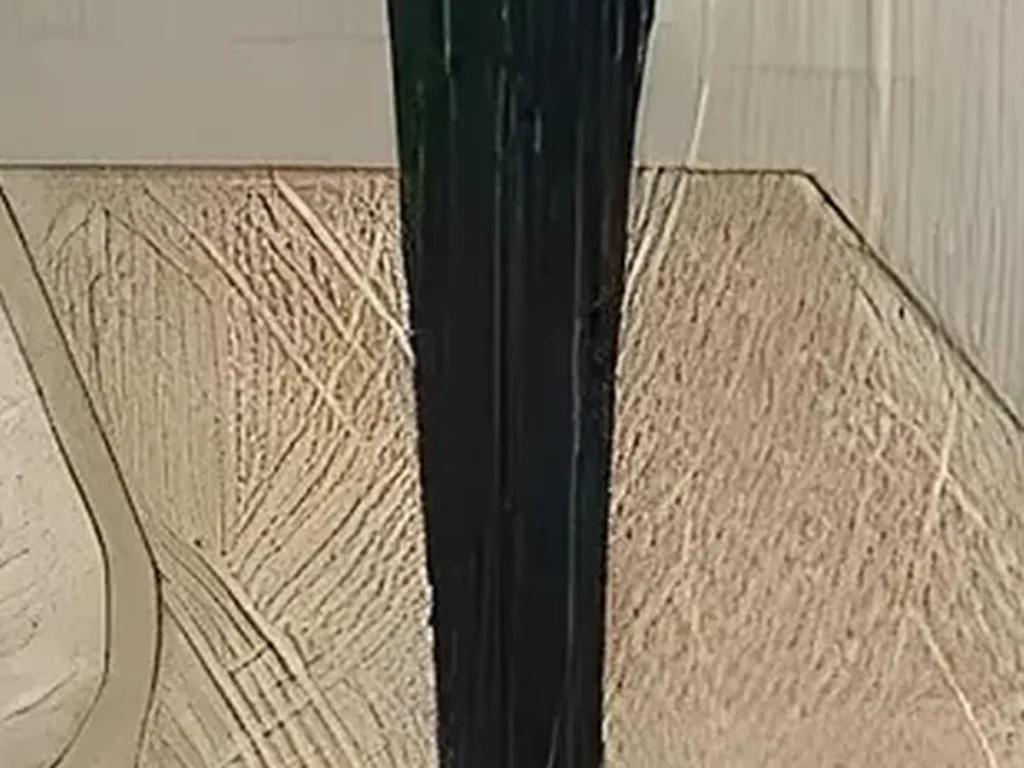
Close-up of hand-combed lines crossing the tan and black fields of wabi-sabi canvas WA08

Two ways to read this earthy abstract

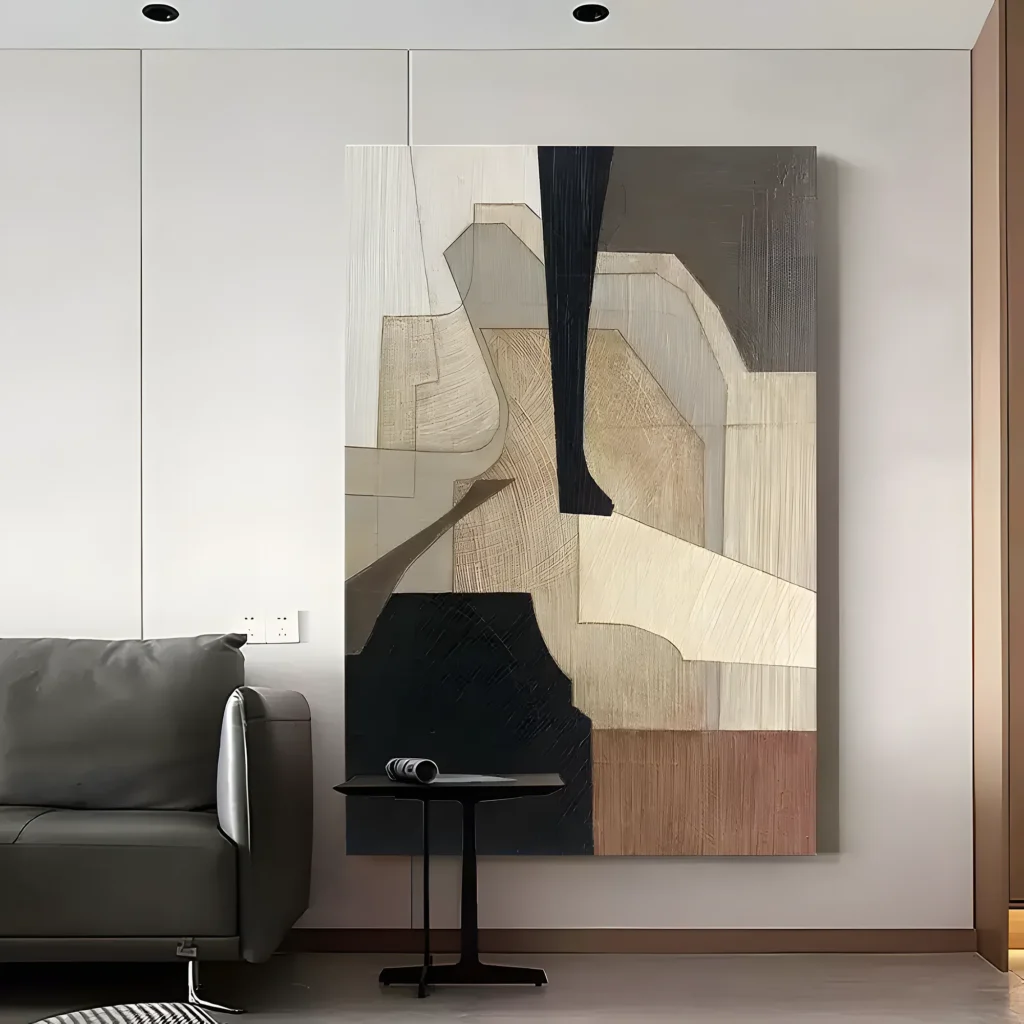
From across the room, this canvas reads as a calm arrangement of tan and black fields, closer to an old map than to a painting. Walk up to it and a second piece appears. Fine combed lines run through the beige panels like raked sand, while the black column carries dozens of straight vertical drags from the tool that shaped it. The dark mass in the lower left is scored with cross-hatched scratches, and the rust patch shows its own horizontal grain. The far view gives the wall structure. The close view rewards anyone who actually stops in front of it.

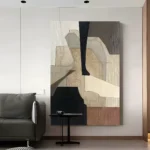
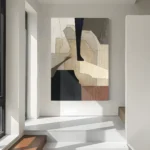
Tan and black earthy geometric wabi-sabi painting displayed as framed wall art in a bright living room

A vertical wabi-sabi canvas for narrow walls

Vertical paintings do a quiet trick, since they pull the eye upward and make a wall feel taller than it measures. This canvas strengthens the effect from inside the frame, because its black column runs from the top edge down to the center like a plumb line. That makes it a natural fit for the narrow wall segments most floor plans leave bare, at the end of a hallway, in an entryway beside the coat hooks, or on the bedroom wall a wardrobe leaves free. Let it hang a little larger than feels safe, then keep the wall around it empty. The format does the lifting on its own.

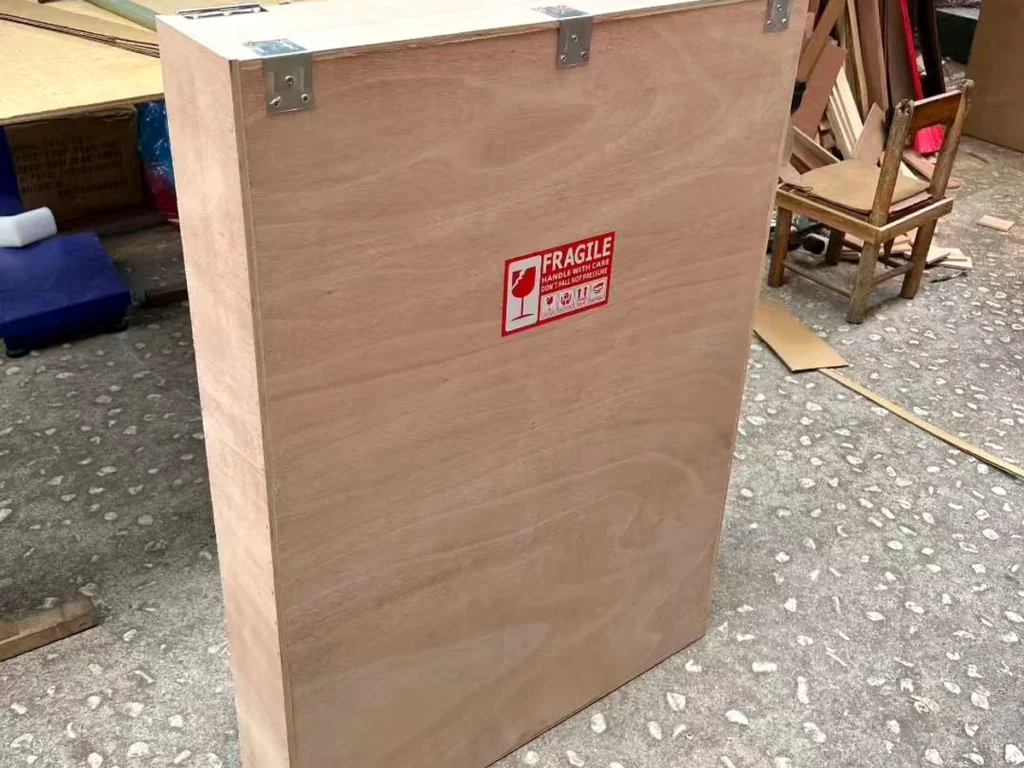
A finished painting sealed in its custom wooden crate with fragile labels

Running this wabi-sabi design across a portfolio

Each canvas is painted by hand, so there will be small differences from piece to piece across a run. The geometry holds on every canvas, the same shapes in the same places, and the tan and black stay at the same weight. The surface is where the variation lives, because the plaster texture is worked by hand and never sets identically, and that is inside a normal and acceptable range. If a group of units needs to look like one set, we paint the run against a reference canvas.

Lead time and scheduling

Plaster texture has to cure before the color goes on, which is the fixed part of this schedule. Budget about nine business days for one to five pieces, rising to about thirteen for twenty. A batch is efficient here, because the texture stage for the whole order is done together. Large formats add curing time rather than painting time.

Why a plain wall needs this tan and black wabi-sabi canvas

Most homes have one wall that stays empty for years, usually because every colorful option feels like too much for the spot. This canvas answers that problem without raising the volume. Its palette holds to tan, cream, greige, and warm brown, so it adds interest while adding almost no new color to manage. Two black masses give the wall a real focal point, a tapering column that drops from the top edge and a cross-hatched block in the lower left. A small rust patch in the lower right corner brings just enough warmth to keep the neutrals from going flat.

The composition of this earthy geometric abstract canvas

The surface is divided like a patchwork, with each field outlined by a fine incised line. The black column enters at the top center, narrows as it falls, then turns out in a small curved foot just past the middle of the canvas. Around it, panels of tan, greige, and cream step down toward the right in wide angled bands. The heavy black mass anchors the lower left, whereas the rust-brown patch beside it hands the eye back up into the lighter fields. Nothing sits symmetrically, yet every shape leans on its neighbors, which is what keeps the whole arrangement feeling settled.

How this textured wabi-sabi canvas is made

Work starts with a coat of gesso, which gives the paint grip while protecting the canvas from cracking over the years. The tan and cream fields are laid down first, combed with fine lines while each layer can still hold a mark, then left to dry fully. The black column and the lower mass are built over that cured ground, so their edges stay crisp instead of bleeding into the lighter paint. Because layers must dry between sessions, a single canvas takes days rather than hours. In raking light the combed lines catch real shadows, so the surface changes as your lamps come on in the evening.

The best rooms for tan and black wabi-sabi wall art

These tones already live in rooms built around wood, linen, and stone, which is why the canvas slots so naturally into japandi and organic modern interiors. In a bedroom it keeps the wall calm while the combed texture gives you something to study up close. In an entryway or hallway it sets a first impression of order, since the palette stays quiet next to coats and everyday clutter. A living room works too, above a sideboard or reading chair, against warm white or greige walls that let the tan fields breathe.

How to size this vertical wabi-sabi canvas

Most people buy art one size too small, then hang it too high, which leaves the wall looking patchy rather than finished. This vertical canvas is forgiving on both counts. On a narrow wall, let it run tall, because the inner black column already pulls the eye upward and makes the ceiling feel higher. Above a console or bed, choose a width near two thirds of the furniture below it. However you hang it, center the painting so its middle sits about 57 to 60 inches from the floor, which puts it at natural eye level.

Pairing and sizing

Hoping to turn this tan and black geometric canvas into a set? The sage and maroon muted abstract canvas (AA09) carries the same soft, earthy restraint, so the two sit together with ease. For a lively contrast, the teal, pink, and orange door painting (MA02) brings a splash of color that makes this quiet piece stand out.

For a wall above a console or bed, pick a width close to two-thirds of the furniture below, so the piece feels grounded. Set the center near 57 to 60 inches from the floor. Every size is painted to order, and you approve photos of the finished canvas before it ships.

Frequently asked questions

What do the combed lines on this canvas do?

They give each tan and cream field its own grain, similar to raked plaster or sanded wood. Under a side lamp the lines catch light and shadow, so the surface reads differently through the day. Each line is drawn by hand into the paint while it is still workable.

Can the black areas of this painting be softened?

Yes. The black column and the lower mass can shift toward charcoal or deep brown, and the rust patch can be muted or left out entirely. Changes are repainted by hand to your direction, never filtered, so tell us how quiet you want it.

What wall color goes with tan and black wabi-sabi art?

Warm white, oatmeal, and greige stay in the same soft register and are the safest choices. A strong cool white can make the tan fields look muddy. Test a swatch in your own light first, since neutrals shift between daylight and lamplight.

Can designers and staging companies order this geometric canvas direct?

Yes. It is made in our Dafen Art Village studio and supplied straight to trade. The tan and black can be re-weighted toward a scheme, and because the plaster texture is worked by hand, a run for one property is prepared as a single batch.

Which rooms suit this earthy geometric canvas?

Hallways, entryways, and bedrooms first, where its vertical format and calm palette work hardest. It also suits a japandi or organic modern living room, hung where the combed texture can be seen up close.

How do I care for the combed texture?

Dust it occasionally with a dry, soft brush, following the direction of the combed lines. Avoid damp cloths on the textured surface. Keep the canvas out of prolonged direct sun.

Will my canvas match the photos exactly?

Very closely, though the combing and scratches vary slightly from piece to piece because each canvas is worked by hand. In wabi-sabi that variation is part of the point. You approve photos of your own canvas before it ships.

What size works for a narrow hallway wall?

Let the vertical format run tall, since the wall's height is the asset you are using. Above a console or bench, choose a width near two thirds of the furniture. Center the canvas so its middle sits about 57 to 60 inches from the floor.

Trade specification

How this piece is made and supplied

Made
Hand-painted to order in our studio in Dafen Art Village, Shenzhen. Nothing printed, nothing held in stock.
Sizes
Any size and any orientation. If the size you need is not listed on this page, we paint to your measurements at the same rate.
Materials
Artist grade oil and acrylic on cotton, poly cotton or premium linen canvas, mounted on solid wood bars.
Finishes
Rolled in a tube, stretched frameless, or framed in black, white, wood, silver or gold. All five frame colors are one price.
Make it yours
Any design in the catalog can carry your own elements. Shift the palette to a scheme, add a small detail, or work from your own reference or photograph.
Before it ships
We photograph every finished canvas and send it to you. Nothing leaves the studio until you approve it.
Trade terms
No minimum order and trade pricing from one piece. Prices are EXW our Shenzhen studio, so freight is quoted separately once we know where the work is going.
Get a Quote on WhatsAppWhatsApp: usually an immediate reply. Email: usually within 12 hours.