

Each PaletteMomento piece is an original, made to order and finished entirely by hand.
Built to last and easy to install. Every piece is made to look right on the wall and stay that way for years.
Make it truly yours. Beyond size and color, we can paint almost anything you can imagine.
Every painting is created the slow way, by hand, by real painters, one canvas at a time.
Nothing leaves the studio that you have not already seen and signed off. We work with you at every step, so there are no surprises on arrival.
Packed the way your project needs it. Prices are EXW our Shenzhen studio, so the freight stays visible and separate.
Any size outside this list is produced to your dimensions at the same rate.
Rolled Canvas
Frameless Stretched
Black Frame
White Frame
Wood Frame
Silver Frame
Gold FrameWhatsApp: usually an immediate reply. Email: usually within 12 hours.
Or email support@palettemomento.com
We paint every piece to order in Dafen, Shenzhen, so the size, the palette and the finish are all decided by your project rather than by what happens to be in stock. You see photographs of the finished canvas before it ships, and nothing leaves the studio until you approve it. Trade pricing starts at one piece, and the rate improves as the count goes up.
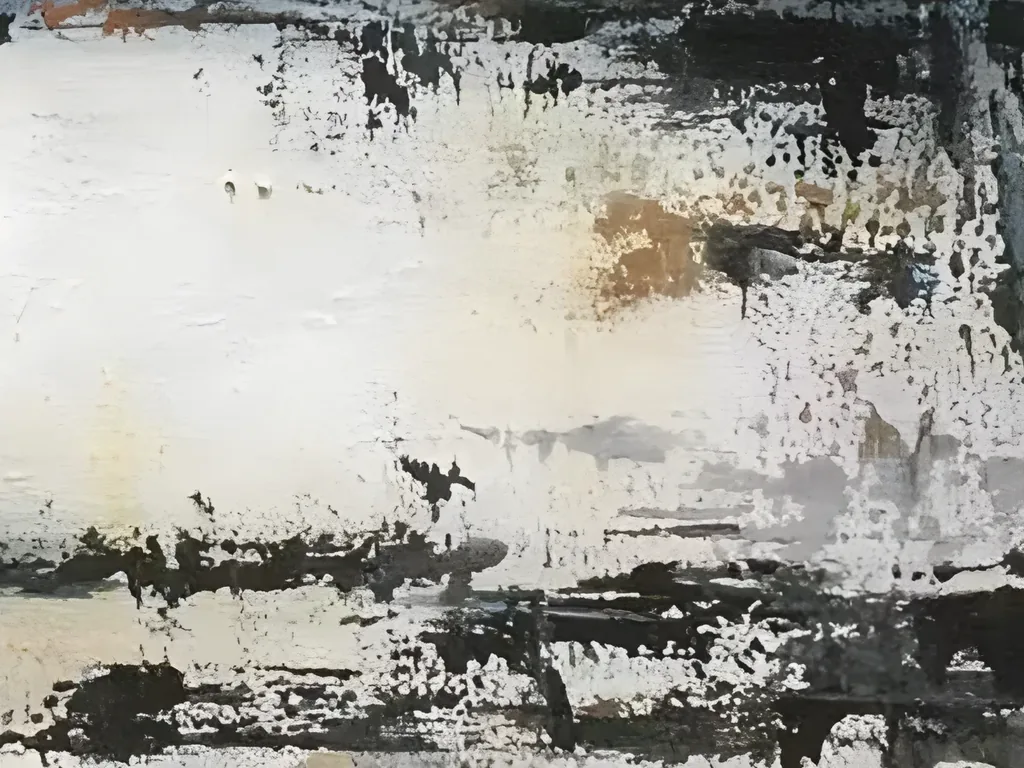
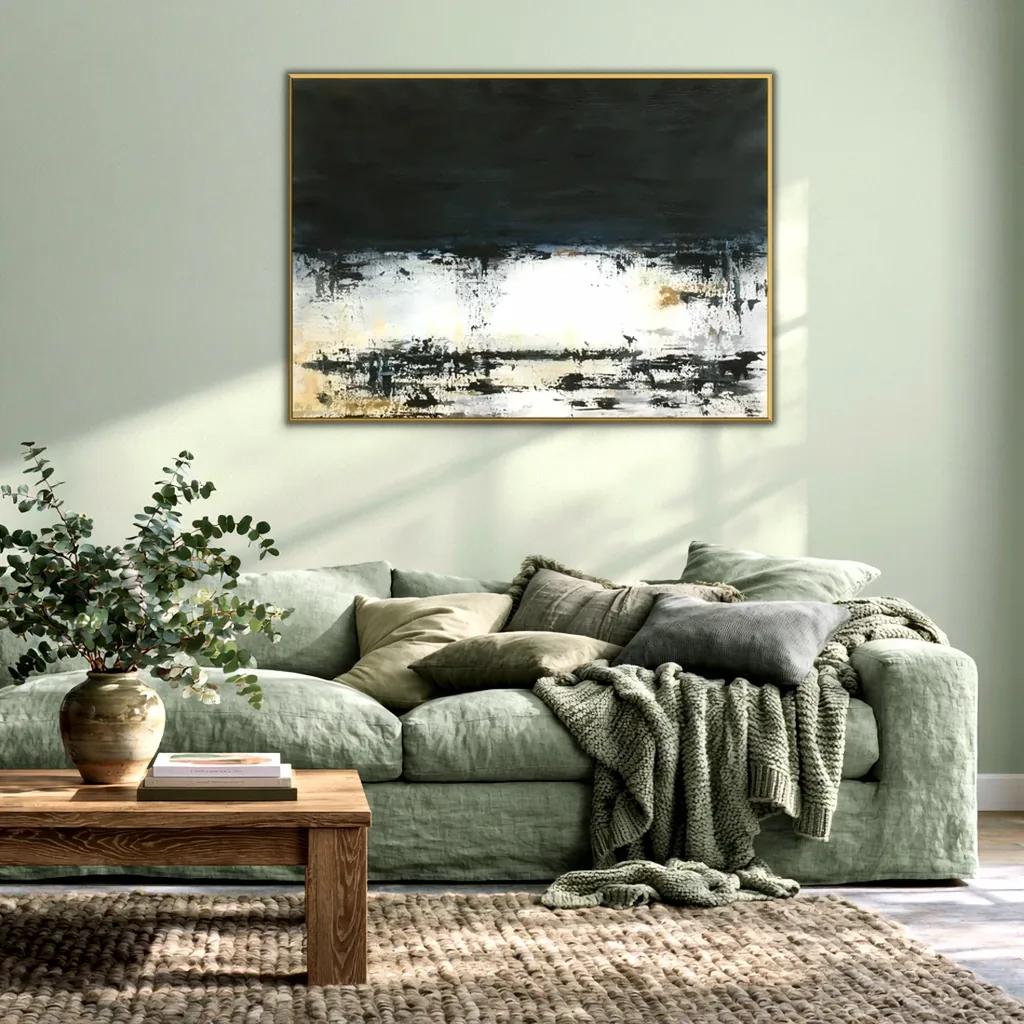
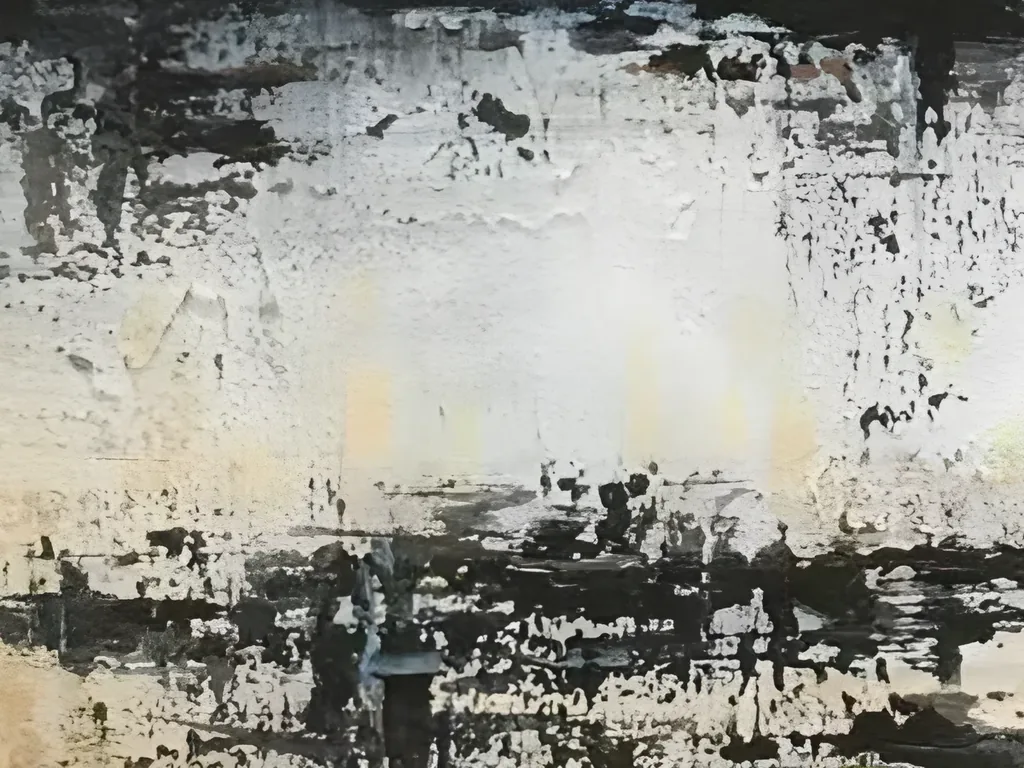
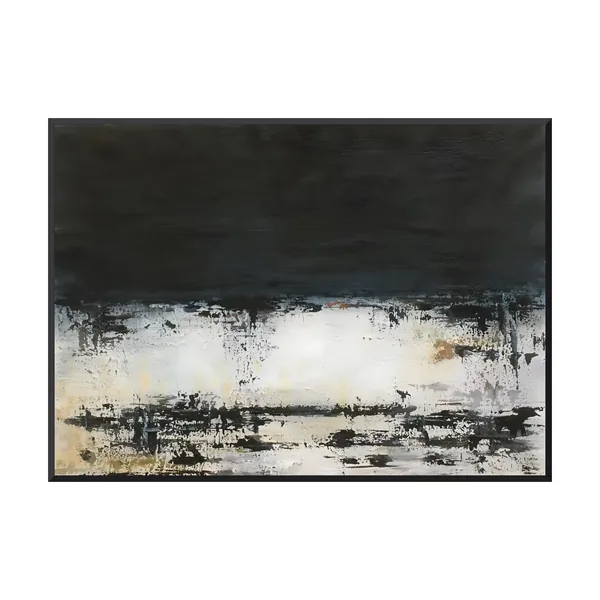
The top of WA13 is one solid field of charcoal black, brushed in long horizontal strokes that still show under a low light. Along its lower edge a thin navy tint appears, and then the black breaks into drips that hang down into the white. The white band is not clean. It is chalky, scraped and cracked, with black flecks showing through like old paint on a farm door. A soft amber stain sits right of center, and sand and ochre tones gather in the lower left. Near the bottom, a broken black line runs nearly the full width and anchors the whole canvas.

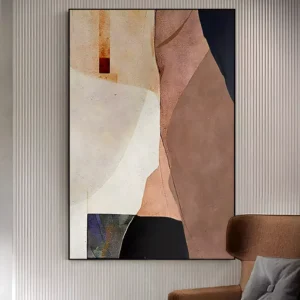
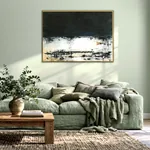
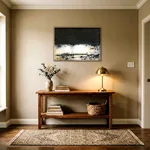
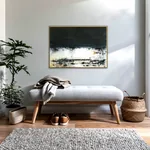
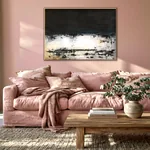
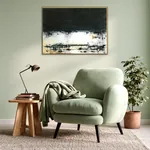
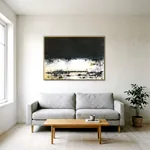
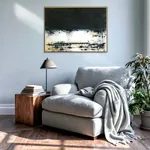
Strong black looks best with a soft wall around it. Sage green, dusty pink and warm sand all work, because they warm the charcoal and echo the faint stains in the white band. In the living room photo with a dusty pink wall and a pink linen sofa, the painting becomes the anchor of a warm, modern room. On a white wall above a light gray sofa, it looks crisp and graphic instead. Linen, oak, stoneware and jute suit its worn surface, while high gloss and chrome feel too sharp beside it. Used as black and white wabi-sabi wall art for a bedroom, it puts a night sky over the headboard. As a textured abstract canvas for a dining room, it holds its own above a sideboard or at the end of a long table.

A finish this weathered has to be made on purpose, and one painter makes all of it. At our studio in Dafen Art Village, Shenzhen, the horizon and the broken lower band are marked out on premium linen first. The charcoal sky comes next, mixed on the palette to the same warm black as this design. The white is laid on thick and scraped back, which leaves cracks and rough edges. The black drips and flecks are worked into that surface, and the amber and sand stains are added toward the end. Acrylic is the standard paint for this canvas, and oil is available on request with a longer schedule. Through WhatsApp you receive photos and short videos as the painting goes, and the canvas waits in the studio until you approve its daylight photos.
An order of one to five pieces takes about 7 to 10 business days, and a run of six to twenty takes about 10 to 15. The 72 by 51 and 84 by 60 inch sizes need the longer end, since every scraped crack on a wall-sized canvas comes from the same pair of hands.
Wabi-sabi is a Japanese way of seeing beauty in things that are worn, imperfect and unfinished. It took shape around the tea ceremony between the 14th and 16th centuries, when tea masters such as Murata Shukō and Sen no Rikyū chose simple, handmade utensils over fancy imported ware. Zen Buddhism was a major influence, along with older Japanese ideas about age and simplicity. WA13 brings that idea to a modern wall. Its white field looks like paint that has weathered for years, with black flecks showing through, amber stains and drips that were never wiped away.
The layout of WA13 is simple. A solid charcoal sky fills a little more than the top half. A chalky white band sits under it, and a broken black line runs through the lower quarter. Where the dark sky meets the white, the paint does not stop at a straight edge. Black drips hang down into the light like rain or roots, and a faint navy tint shows along the seam. Near the middle, the white is at its brightest, almost glowing. That bright patch is where the eye lands first, before it drifts out to the stains on the left and right.
At first look, a two-tone canvas could pass for minimalist art. The difference is in the surface. Minimal painting is often smooth and exact. WA13 is the opposite: the white is scraped, cracked and stained, and the black sky carries visible horizontal drag marks. Wabi-sabi asks for warmth and signs of age, and here those come from the sand tones in the lower left and the small amber stain on the right. That is why the painting suits rooms with linen, raw wood, stoneware and jute better than rooms of glass and chrome.
Large dark areas tend to read as heavy, and in studies of color and feeling, gray is often linked with a low mood. WA13 avoids that because its lower half is so bright. The jump from charcoal to chalk white is strong, which gives the painting a clear, graphic look from far away. Warm accents keep it from looking cold. On a sage, blush or sand wall, the black looks rich rather than gloomy, as the photos here show. For a designer, it is a simple way to add one deep, grounding note to a pale scheme.
High contrast art works well in busy commercial rooms. In a restaurant, WA13 gives one strong shape that diners see from the door, and the dusty pink living room photo shows how a warm wall softens it. In a hotel bedroom, the dark sky above the bed feels like night, while the bright band below keeps it from feeling closed in. Offices and reception areas can use it as a serious, steady anchor behind a desk or a waiting sofa. Since the palette is neutral, the same design repeats easily from room to room on a whole floor.
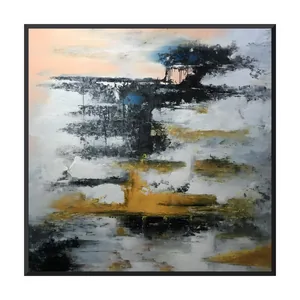
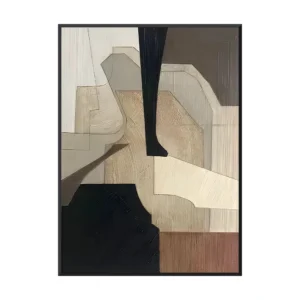
Two other designs work well near WA13. The black, gold and gray scraped abstract (AA17) uses the same knife-scraped black on pale gray, with bands of ochre gold, in a square shape. The tan and black earthy geometric wabi-sabi canvas (WA08) shares the black and warm sand in a tall format, which suits a narrow wall nearby.
The proportions of WA13 run 7 to 5, wide but not panoramic. Over a 72 inch sideboard or a king bed, the 48 by 34 inch size spans roughly two thirds of that width. Over a 90 inch sofa, choose 60 by 43. For most rooms, set the midpoint of the canvas 57 to 60 inches above the floor. Nothing leaves the studio until you have seen daylight photos of the finished canvas and said yes.
Wabi-sabi finds beauty in things that look worn and imperfect. WA13 has that look, with a chalky white field that seems cracked by weather, black drips left to run and soft amber and sand stains. The palette stays muted, and the layout is simple, one dark sky over one pale band. Nothing is polished or perfectly straight.
Soft, warm walls work best. Sage green, dusty pink, sand and warm white all soften the charcoal and pick up the faint warm stains, as the room photos show. A bright, cool white wall makes the contrast very sharp, which can suit a modern office more than a home. Avoid a dark charcoal wall, where the black sky would disappear into the paint around it.
Use two thirds of the bed width as a guide. A queen bed is about 60 inches wide, which points to roughly 40 inches, so the 36 by 26 inch size is a safe pick. For a king bed around 76 inches, step up to 48 by 34. The 7 by 5 shape keeps the dark sky from looking like a thin stripe, even at the smaller sizes. Leave 8 to 10 inches of bare wall above the headboard so the painting does not crowd the bed.
Yes. The sky can be painted in deep navy, a warm charcoal or a softer slate gray, and the stains can lean more amber or more sand. The bright patch in the middle of the white band can also be toned down. Share a paint chip or a room photo, and the painter matches the mix to it. Progress photos show the new mix before the canvas is finished.
Yes, mostly in the white band. The paint there is thick and scraped, with small cracks and raised edges that you can feel with a fingertip and see under side light. The black sky is smoother, with fine horizontal brush lines. It is a textured painting, though not a deep 3D relief.
The layout, the balance of black and white and the position of the stains stay the same. The cracks, flecks and drips change from canvas to canvas, because the surface is scraped by hand each time. That variation is part of the wabi-sabi look rather than a flaw. Each finished canvas is shown to you in daylight photos for approval before it ships.
A thin gold frame warms the charcoal and picks up the amber stain, as the sage, pink and sand rooms here show. A black frame merges with the sky for a cleaner, modern edge, as in the main image. Wood suits rooms with oak and linen. Rolled canvas, frameless stretched, white and silver finishes are available too.
Share the code WA13 with your sizes, the piece count and a delivery address that includes the postcode. On WhatsApp the reply usually comes right away, and by email usually within 12 hours. There is no minimum order. Paintings are priced EXW our Shenzhen studio, and freight is quoted separately once the destination is known, either door to door or to the forwarder you already work with.