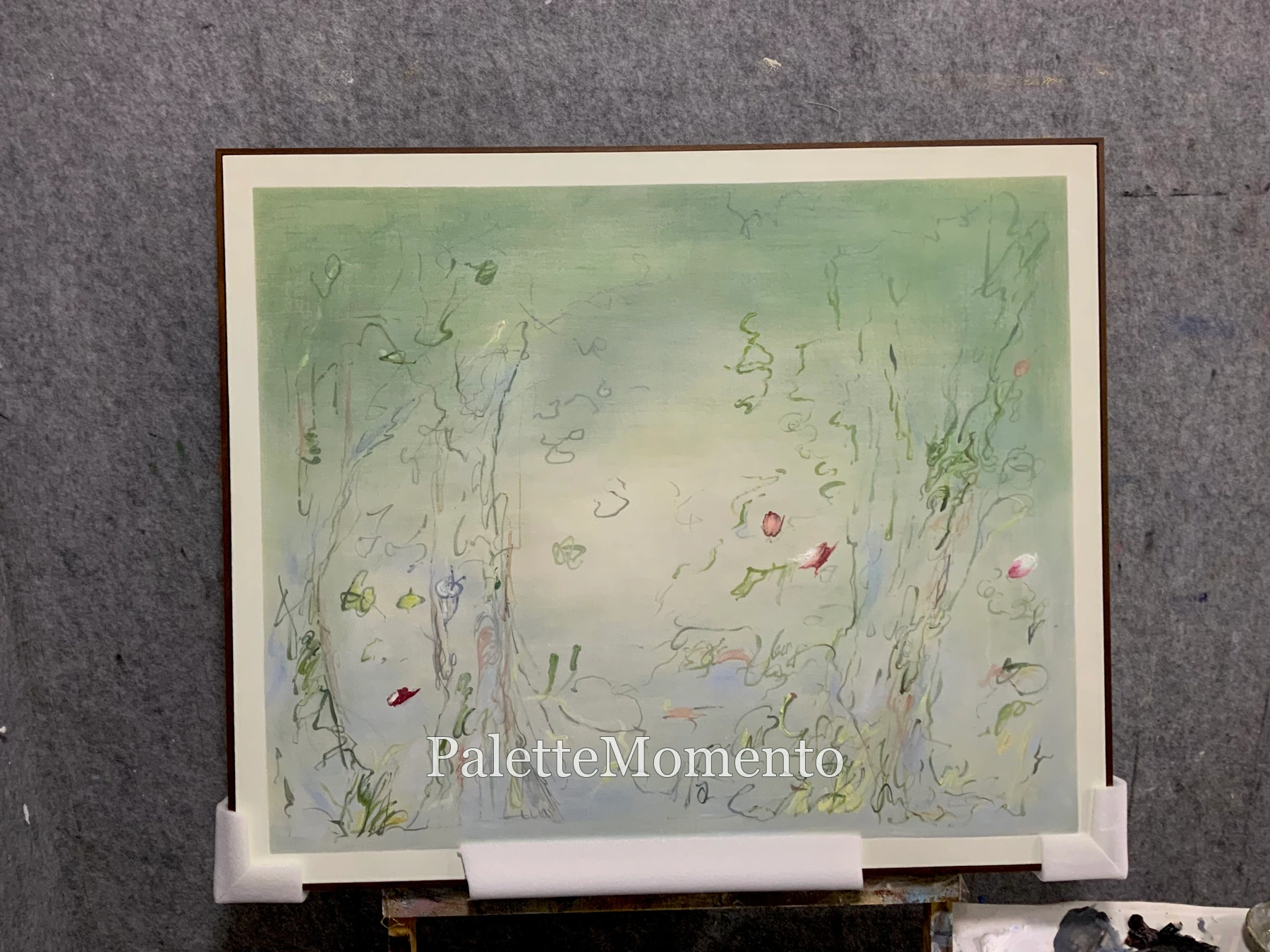
A real client commission
Textured Abstract Painting Commission: Capturing the Spirit of an Ivory, Gray and Rust Composition
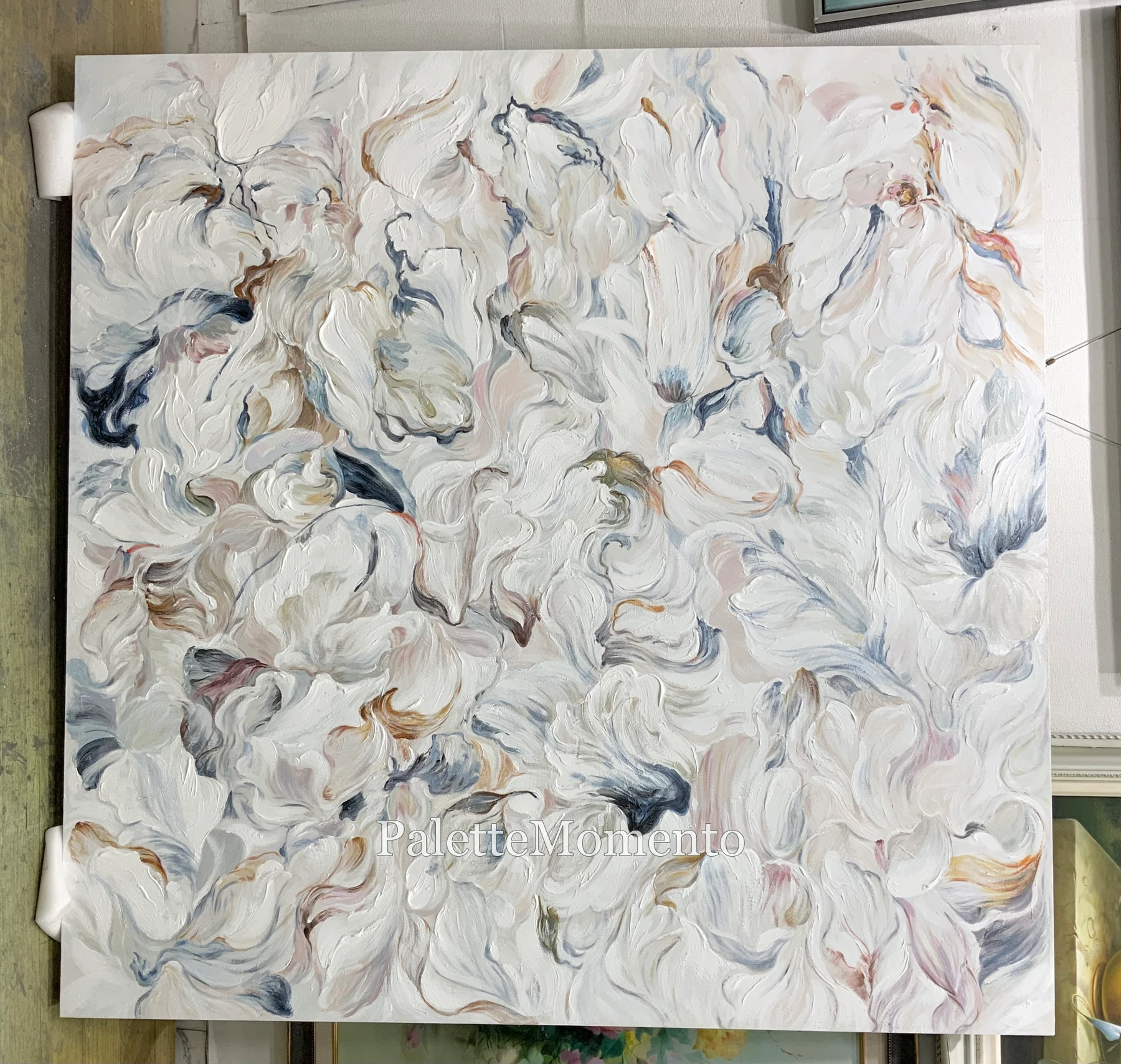
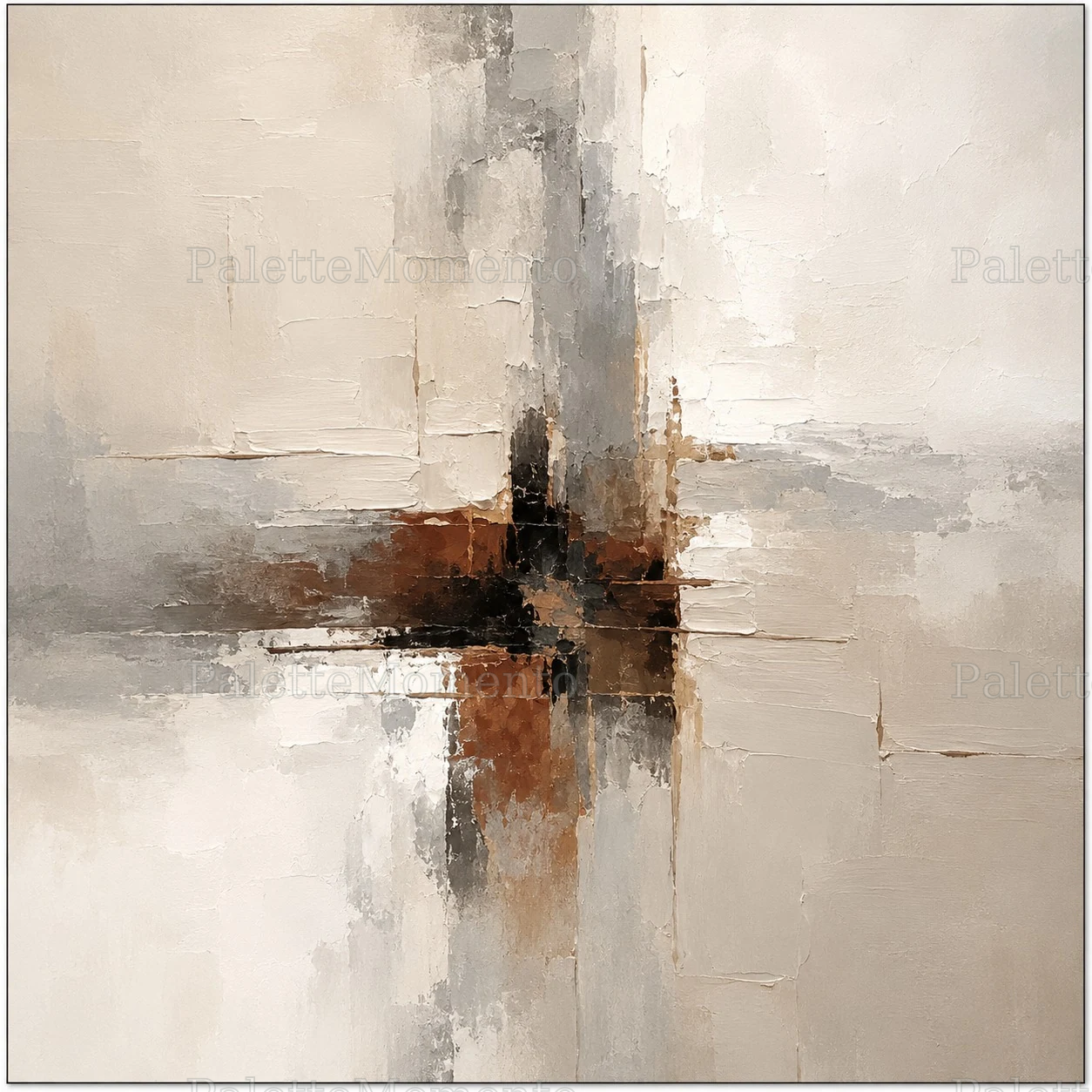
The client commissioned us to paint a 130 × 130 cm textured abstract canvas from an existing artwork. An artist himself, he brought a distinctive, refined taste and unusually exacting expectations to the commission. The challenge was to preserve the composition’s spirit—not simply its shapes. His final request, to brighten the lower-left and upper-right areas with creamy white, shows how closely he considered even the quieter parts of the painting.
130 cm wide × 130 cm high · Hand-painted texture · Five days of painting
Choosing a studio for a demanding abstract commission
The client was himself an artist, with a distinctive, refined taste. He wanted a 130 × 130 cm painting that retained the reference’s movement and balance—not simply its arrangement of ivory, gray and rust-brown shapes. Abstract painting can look deceptively simple; overly uniform edges and heavy marks can make an otherwise recognizable composition feel rigid.
Past work helped him judge our painting standard
Our previous commission cases gave him confidence in the quality of our work. For an artist assessing a subtle abstract composition, seeing what we had already painted was an important part of choosing the studio.
Practical help addressed his payment concerns
He was initially uneasy about paying a 50% deposit by bank transfer. Our team worked with him to look for the most economical packing and shipping options for his order. He valued the attentive service and the effort put into those practical decisions, which helped him feel comfortable proceeding.
Progress photos became a written part of the order
We provide progress photos for every order. This client specifically asked for that commitment to be recorded on his invoice, giving him a written record that he would be able to follow the painting’s development. He then paid the standard 50% deposit.
Our standard deposit is 50%. Clients may choose to pay in full, and the deposit percentage for a high-value order can be discussed individually. This client used the standard 50% arrangement.
Finding the structure before building the surface
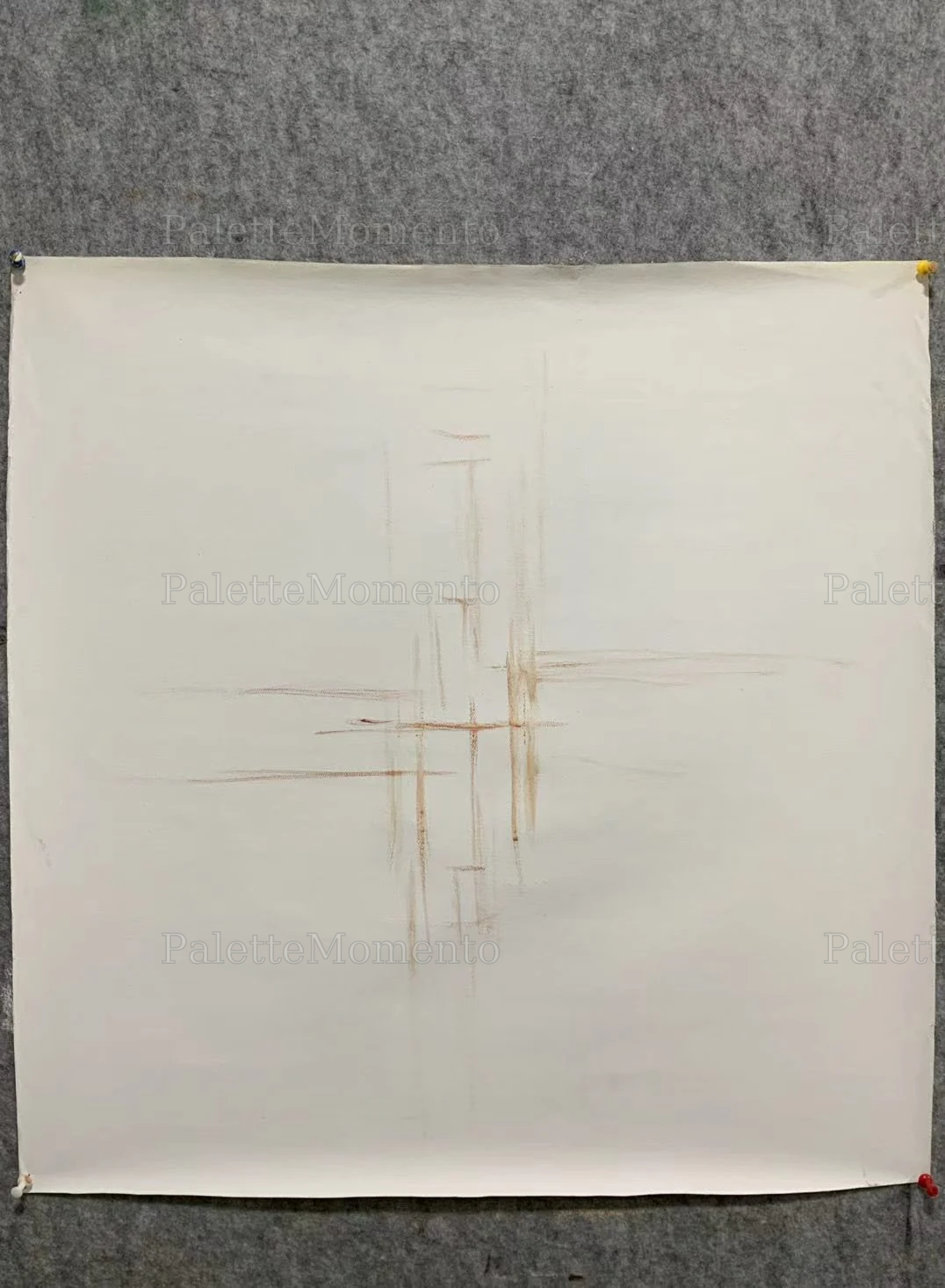
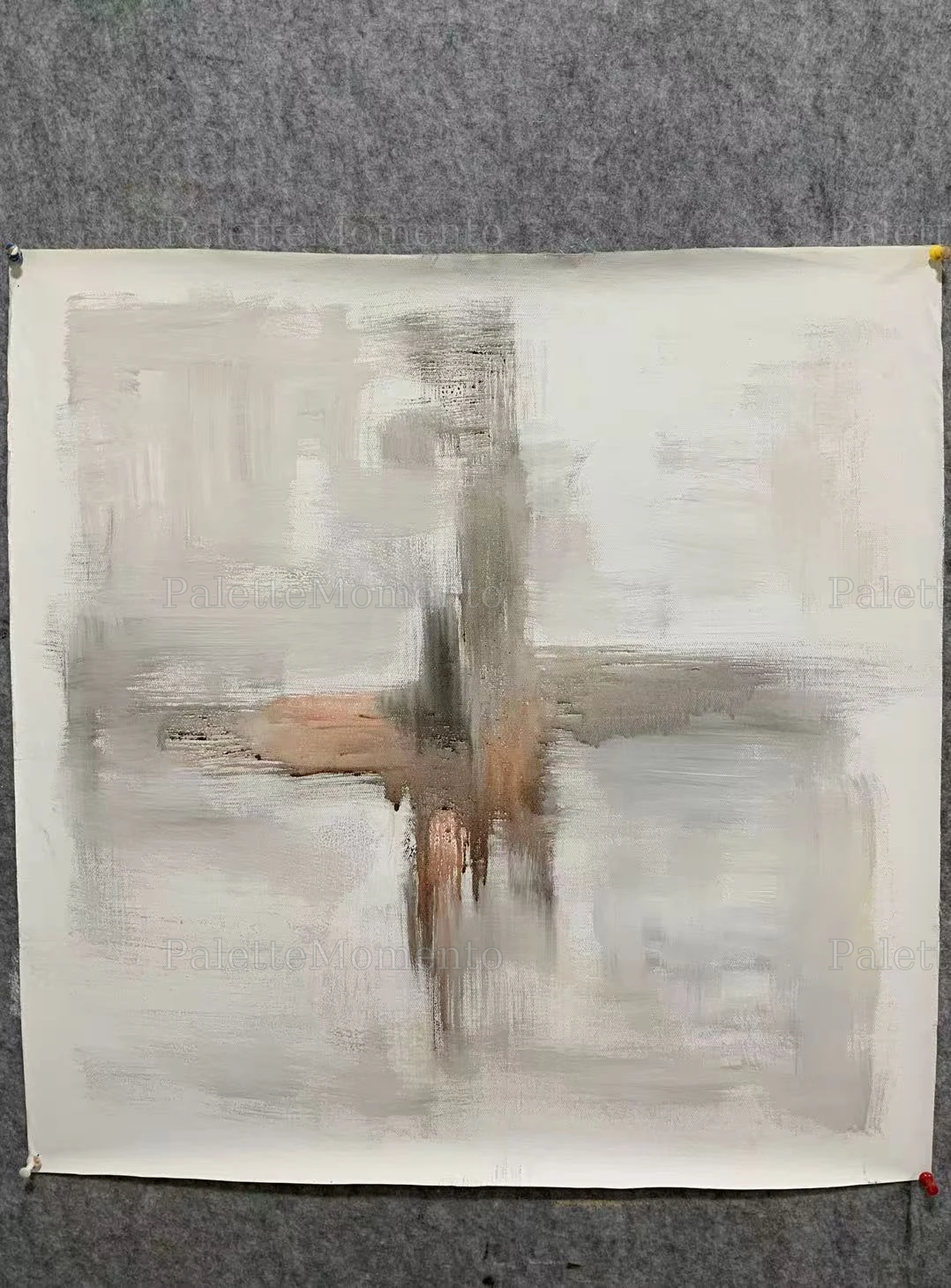
The earliest photograph shows fine warm lines across a pale ground. They locate the main vertical and horizontal movements without filling the canvas. In the next view, broader gray and muted brown strokes begin to establish their weight, with areas of thin paint leaving the canvas weave visible.
Giving the pale areas as much attention as the center
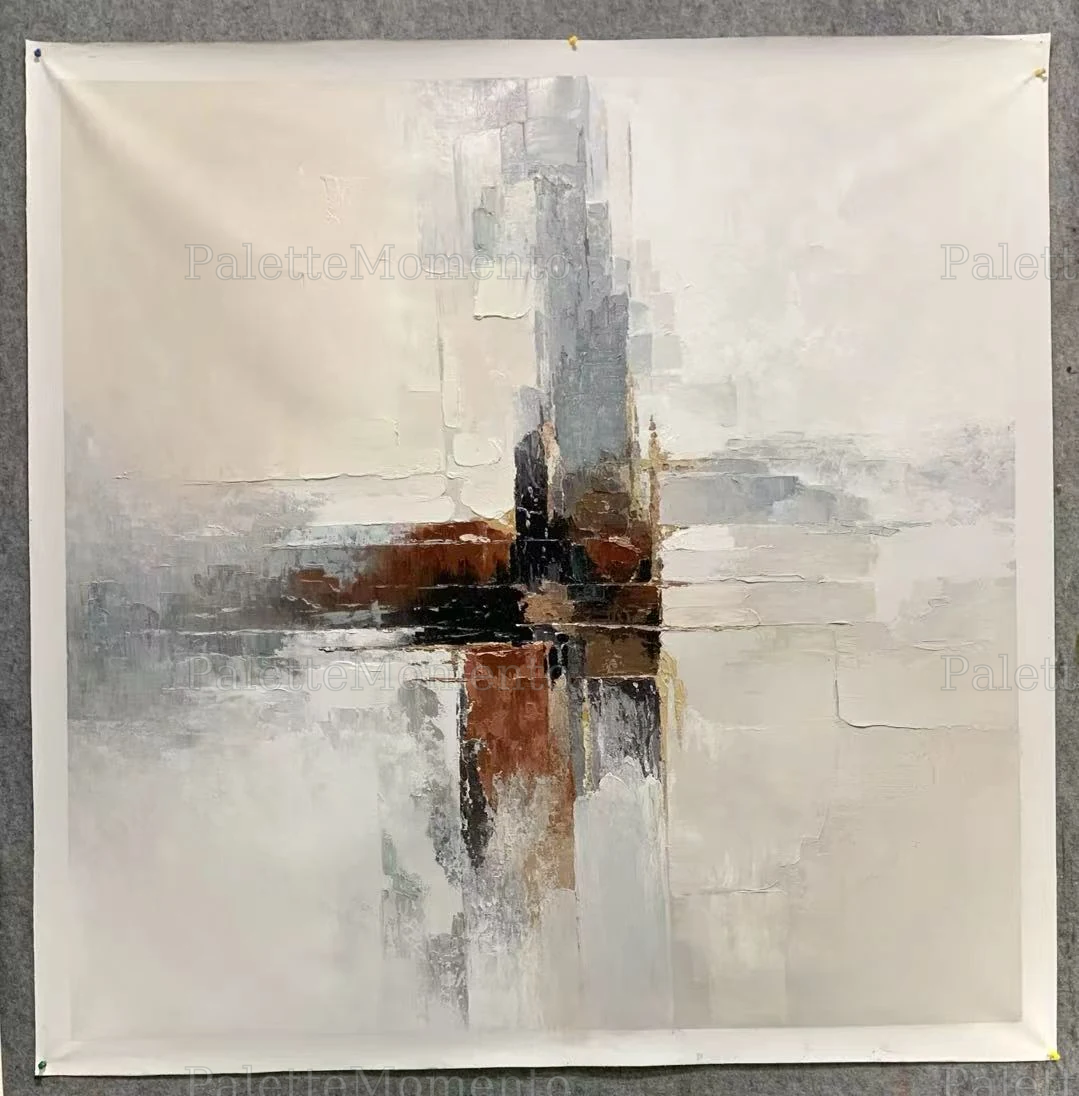
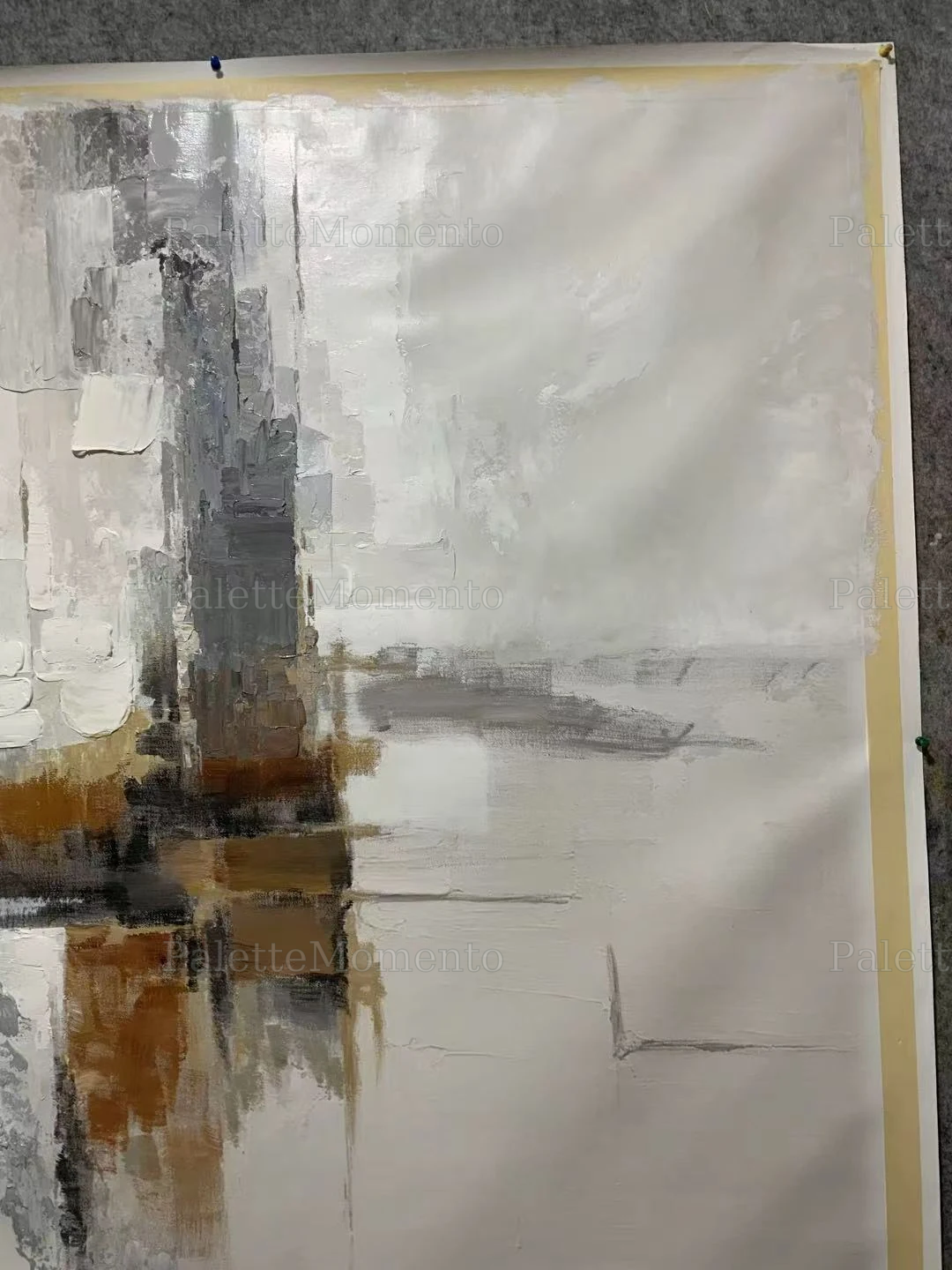
As the painting develops, the gray vertical form becomes more substantial and the horizontal passages extend outward. Ivory paint overlaps their edges, interrupting the darker shapes instead of outlining them uniformly. The pale areas are active parts of the composition, with broad strokes and quieter transitions of their own.
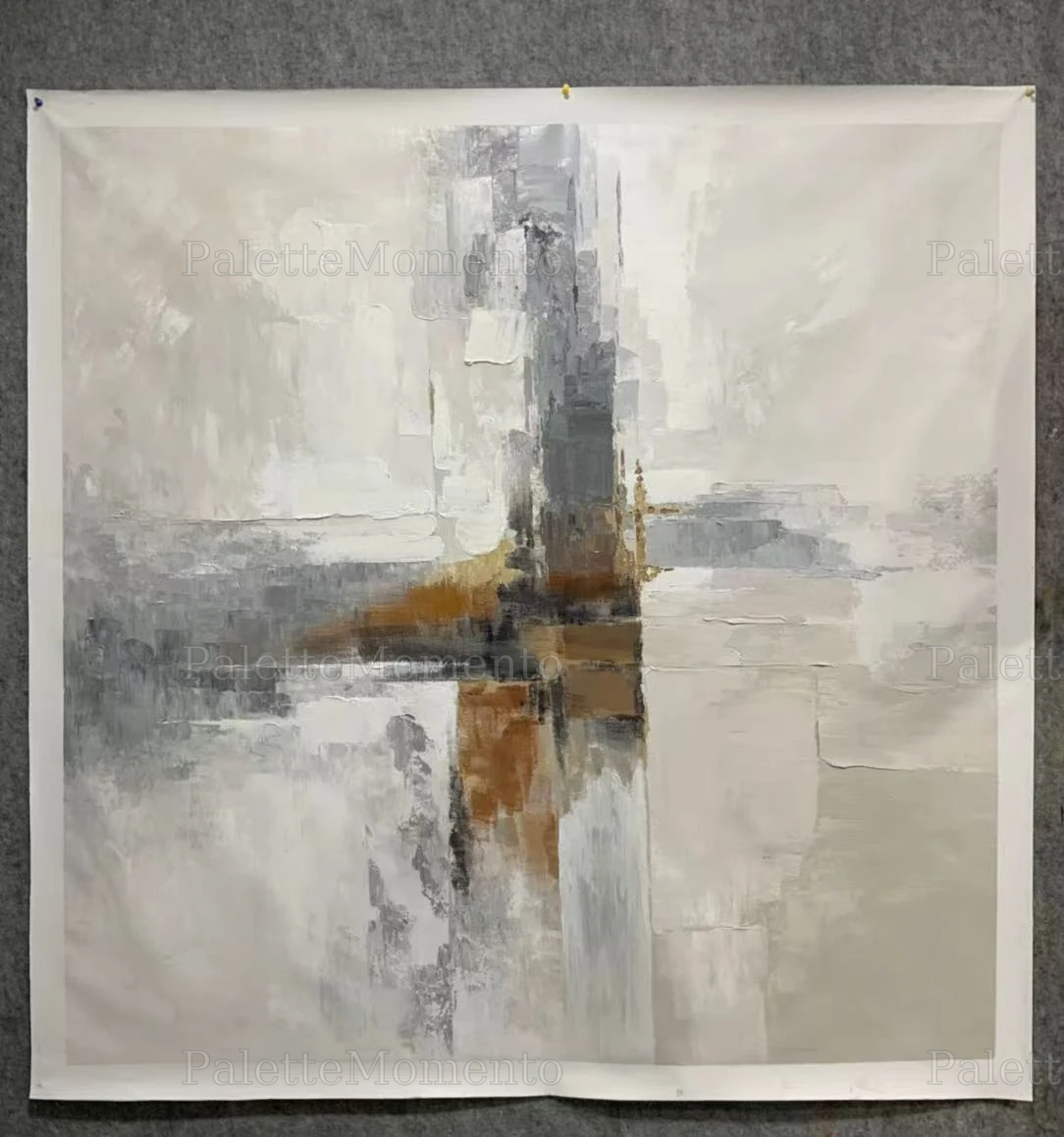
The developing full-canvas photograph shows this balance taking shape. Some edges remain broken and soft; others stand above the surface as clear ridges. That variation matters as much as the choice of colors.
A small adjustment with a precise purpose
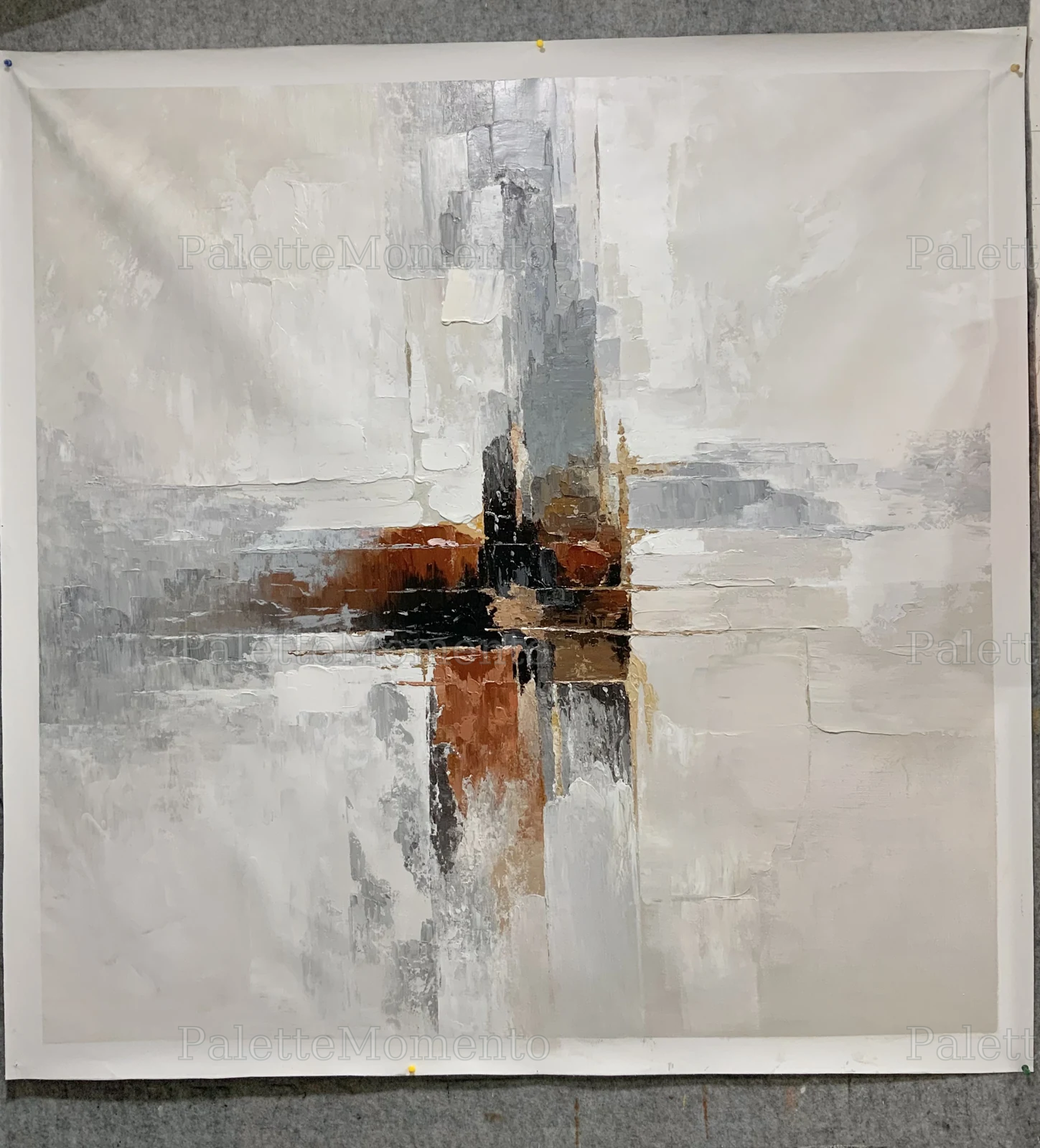
The later studio photographs show a more concentrated black and rust-brown center against broad, quieter areas of ivory and gray. The two views below preserve the full composition, so the relationship between that center and the surrounding light passages remains visible.
In the final round of changes, the client asked us to brighten the lower-left and upper-right areas by adding creamy white. It was a subtle, specific request: the pale areas mattered to him as much as the dark focal point. We worked that adjustment into the painting while keeping the broken edges and varied surface.
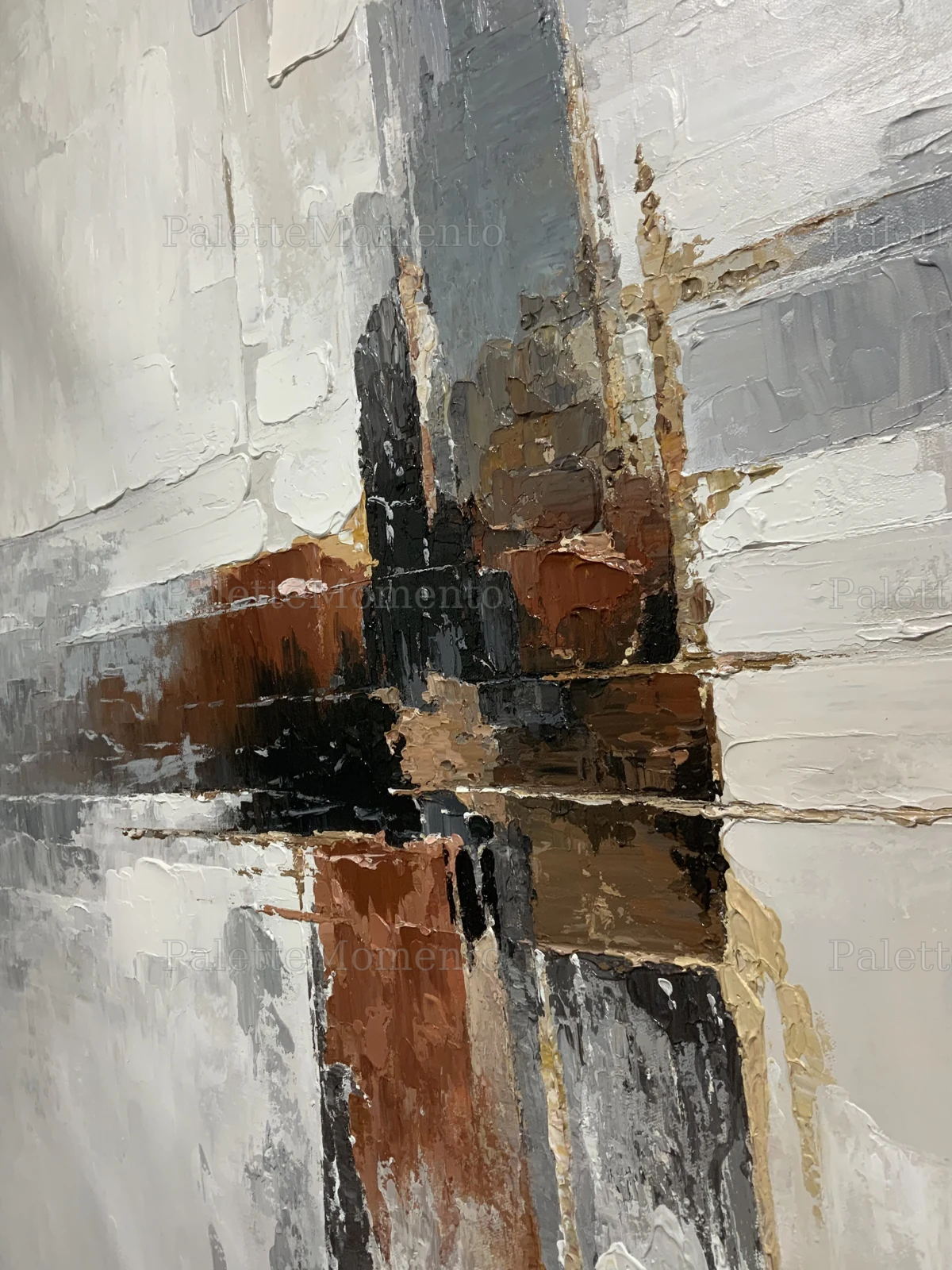
Continuous texture, broken edges and a darker focal point
The close view reveals the painting’s physical construction: broad ivory ridges, flatter gray passages, small tan marks and denser rust-brown and black paint around the intersection. The long pale strokes continue through this area, connecting the focal point to the surrounding space.
A flat photographic print can reproduce the appearance of a painted mark. Here, the mark has actual thickness: raised edges catch the light, and shallow shadows change with the viewing angle. The detail is shown as one continuous view so the relationship between these strokes remains visible.
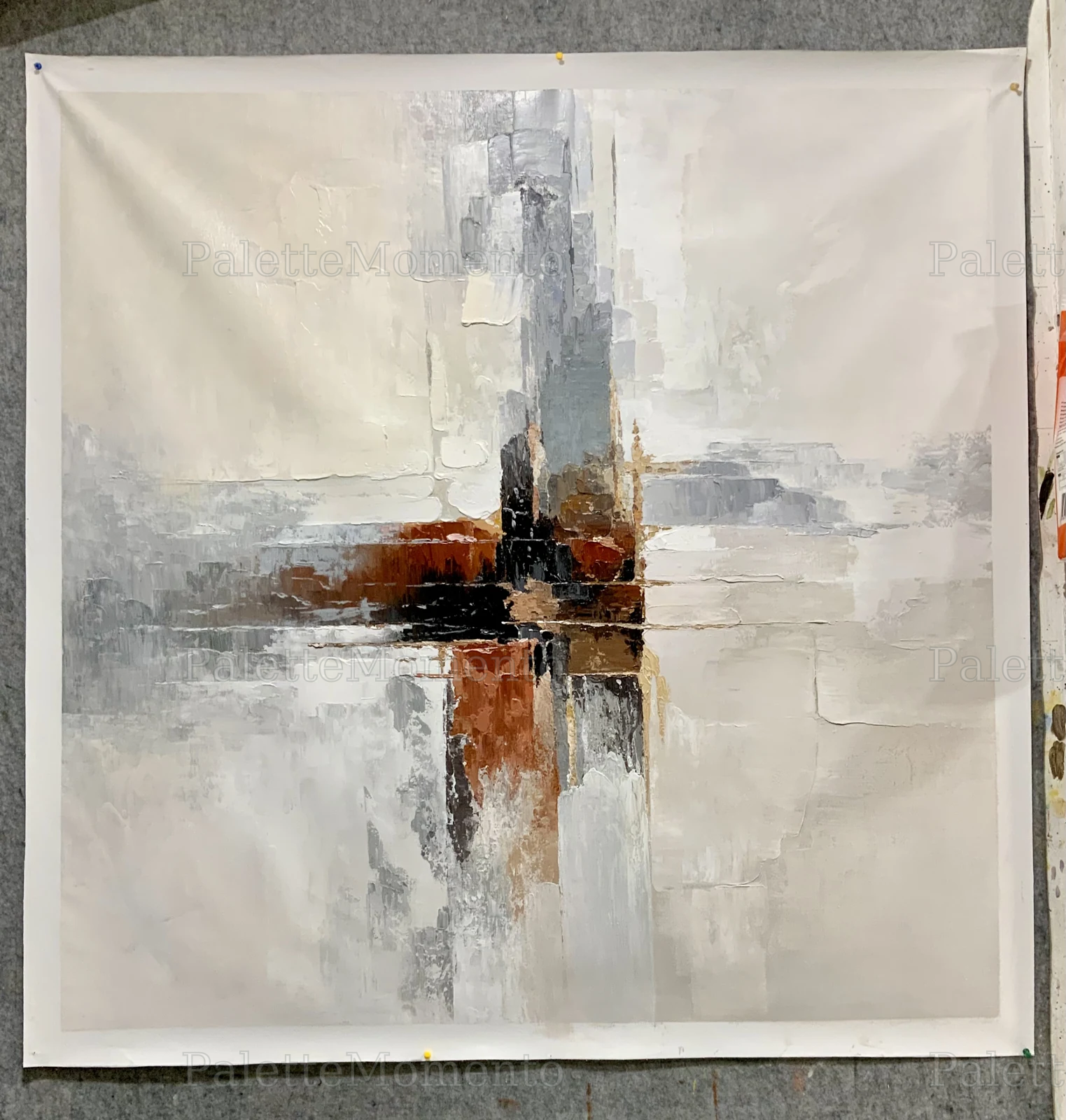
The complete 130 × 130 cm canvas
The finished 130 × 130 cm canvas brings the darker center and warm rust-brown accents into balance with the creamy white passages. The final adjustment gives particular attention to the lower-left and upper-right areas—the quiet corners that mattered to this artist-client.
This commission took five days to paint. That is the recorded painting time for this project, not a shipping estimate or a standard turnaround for every textured commission.
A happy client—and more paintings
The client was very pleased with the finished work and went on to purchase additional paintings from us. For this commission, that further purchase was a tangible sign of his satisfaction.
Grouping several paintings into one shipment can also help reduce shipping costs compared with sending them separately. The saving depends on the paintings’ sizes, packing format and destination, and can be checked when arranging the order.
Your own painting
Share the details that give your reference its character
Send your reference, image width and height, preferred color balance and the surface details that matter most to you. We can discuss the composition and texture before painting begins; any later changes need to be assessed against the work already completed.
Discuss your painting on WhatsAppWhatsApp: usually an immediate reply.
Email: usually within 12 hours.
support@palettemomento.com